- Healthcare
- AI
Designing AfroHealth twice: from preventive care to a careers pipeline
A health platform that evolved from preventive care into a training-and-jobs pipeline. I designed both versions, years apart.
- My role
- Product Designer (two separate engagements, years apart)
- Date
- 2023 - April 2024, second engagement from August 2025
- Platform
- Responsive Web Application
- Tools
- Figma, FigJam, Notion
- Team
- Two co-founders, two developers, and me, with 2 to 3 registered nurses on the platform in V1
Chapter 01
Introduction
The product
Two Nigerians in the US built AfroHealth.care after seeing the same pattern: Black and Brown communities face higher rates of chronic disease, with less access to culturally competent care and little trust in the system.
About the project
One of the first design jobs of my career, and it came back twice. I designed V1's preventive care platform, then returned on a two-month contract to build V2 for a completely new mission.
Chapter 02
Problem space
Problems to solve
Preventive care falls through the cracks
Chronic conditions like hypertension get caught late. Generic wellness apps were not closing the gap, and trust in the system was low.
V1 growth quietly stalled
By April 2024 growth had slowed, and the founder stepped back to rethink the business model. The product went quiet.
A staffing gap on one side, blocked careers on the other
US care homes need CNAs. Across Nigeria, Ghana, and other African countries there are people who genuinely want healthcare careers with no clear path to them.
Why solve these problems?
Both missions attack the same system from different ends: V1 tried to keep communities healthier before emergencies, and V2 strengthens the workforce that cares for them. Connecting African talent to real US healthcare jobs also solves a supply problem money alone had not fixed.
Goals
Company objective
Train African healthcare workers and place them as CNAs in US care homes, cohort by cohort
Project goals
- V1: give people tools to catch problems before they become emergencies
- V2: rebuild the product for training and placement in two months
- Make paying for training feel worth it by unlocking real job access
- Grow early cohorts through word of mouth
Our users
Black and Brown communities in the US (V1)
People at higher risk of chronic disease who needed practical guidance, affordable monitoring, and someone qualified to talk to.
Aspiring healthcare workers across Africa (V2)
People in Nigeria, Ghana, and beyond who genuinely want healthcare careers. They needed training, certification, and a way to get hired in the US.
Jobs To Be Done
Catch health problems early (V1)
Guidance, affordable monitoring equipment, logged readings, and calls with registered nurses.
Get trained and hired in US healthcare (V2)
Learn, pay for training, unlock the fuller job board, apply, and get placed as a CNA.
Bring others along (V2)
Refer-and-earn helps the first cohorts grow through word of mouth.
Chapter 03
Solution space
Exploratory research
User interviews
Who we interviewed
The founders' lived experience of both healthcare systems shaped V1; the pivot drew on what the team had learned about who succeeds in healthcare training
Our hypothesis
- A culturally competent preventive platform could close the care gap (V1, only partly borne out)
- People who genuinely want healthcare careers, trained and placed properly, would sustain the business (V2)
Learnings
- Preventive care demand alone did not sustain growth; by April 2024 the numbers said so
- Selecting for genuine passion for healthcare, not just a way out, became a core part of the V2 model
Solutions
ProblemPreventive care falls through the cracks
SolutionV1: guidance, affordable home monitoring sold in-platform, logged readings, habit tracking, and bookable nurse calls.
ProblemV1 growth quietly stalled
SolutionAn honest pause: the founder stepped back to rethink the business model rather than pushing a product that was not compounding.
ProblemA staffing gap on one side, blocked careers on the other
SolutionV2: train candidates and place them as CNAs in US care homes, plus a healthcare-only job platform. Paying for training unlocks the fuller job board.
V1
V1: The preventive care platform
Practical guidance, affordable monitoring equipment, self-logged readings analyzed over time, habit tracking, and bookable calls with our registered nurses.
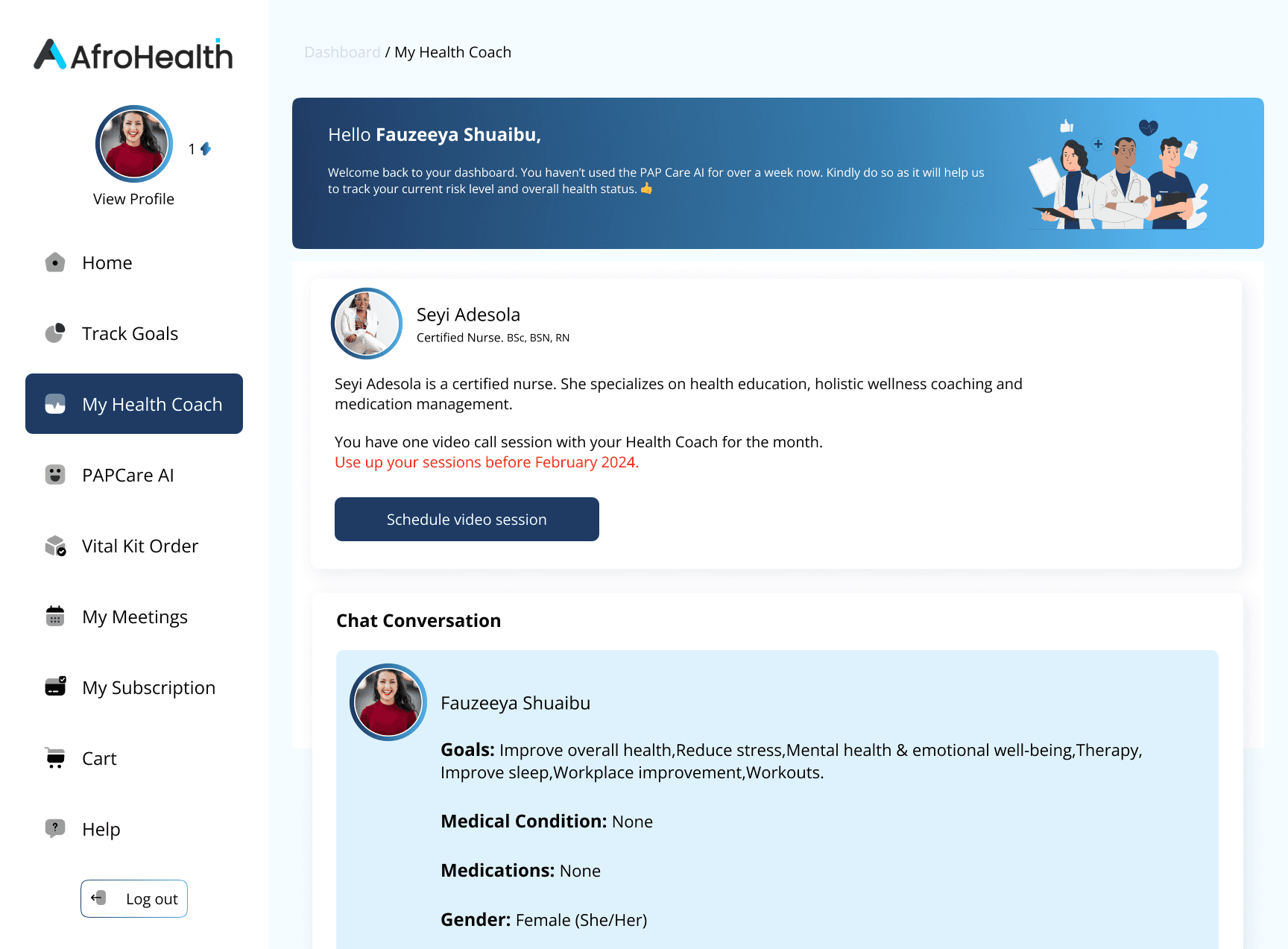
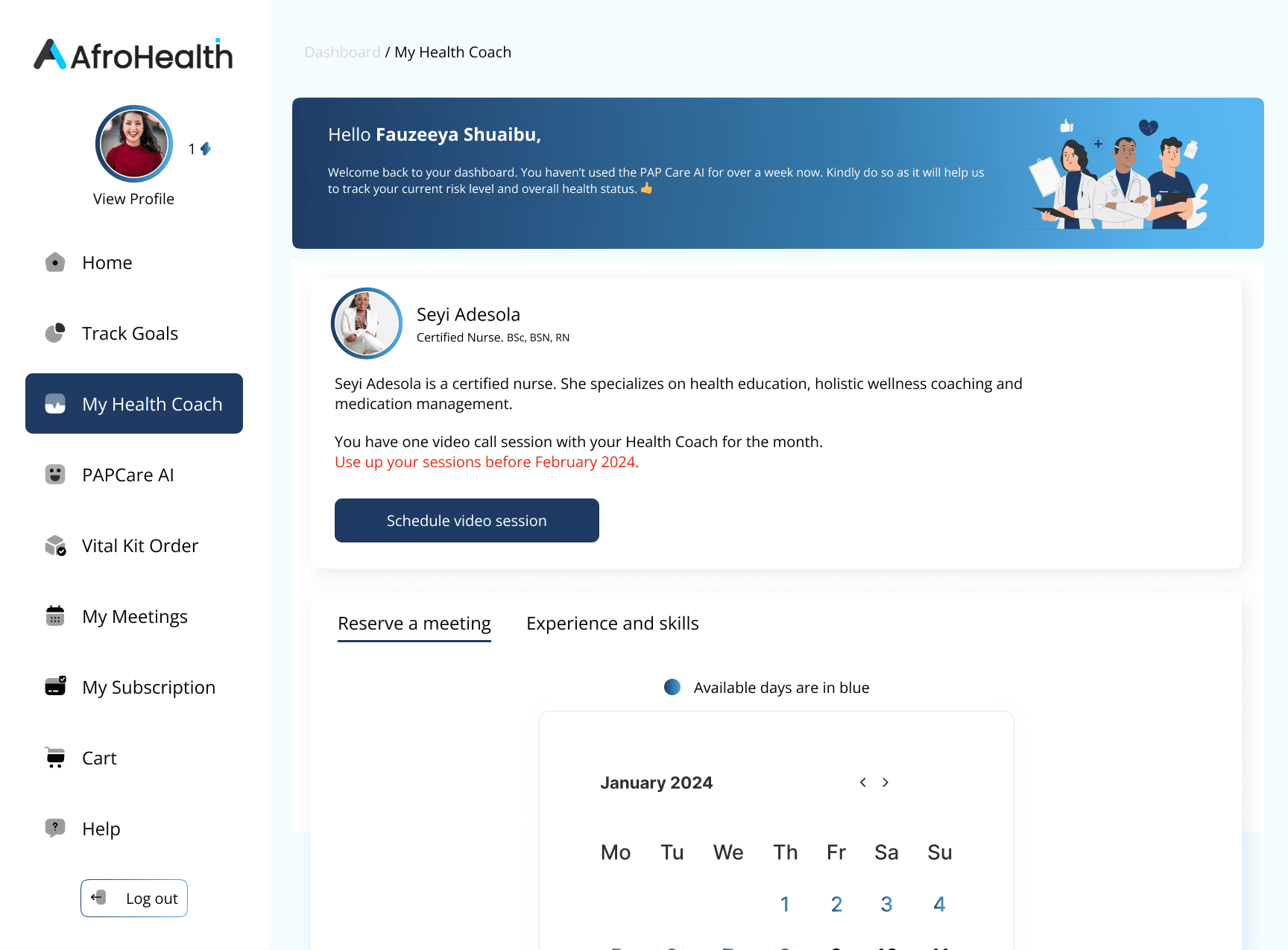
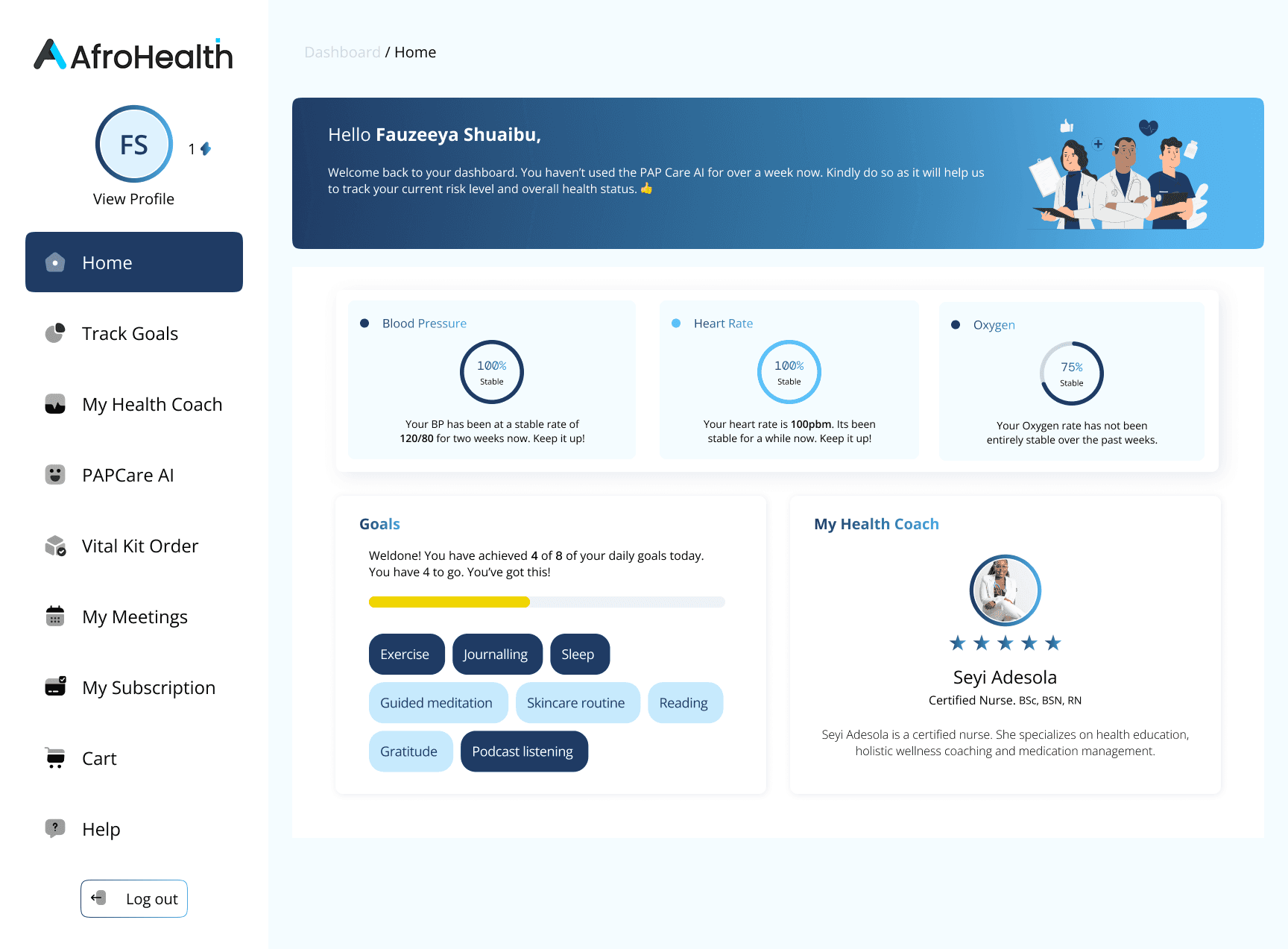
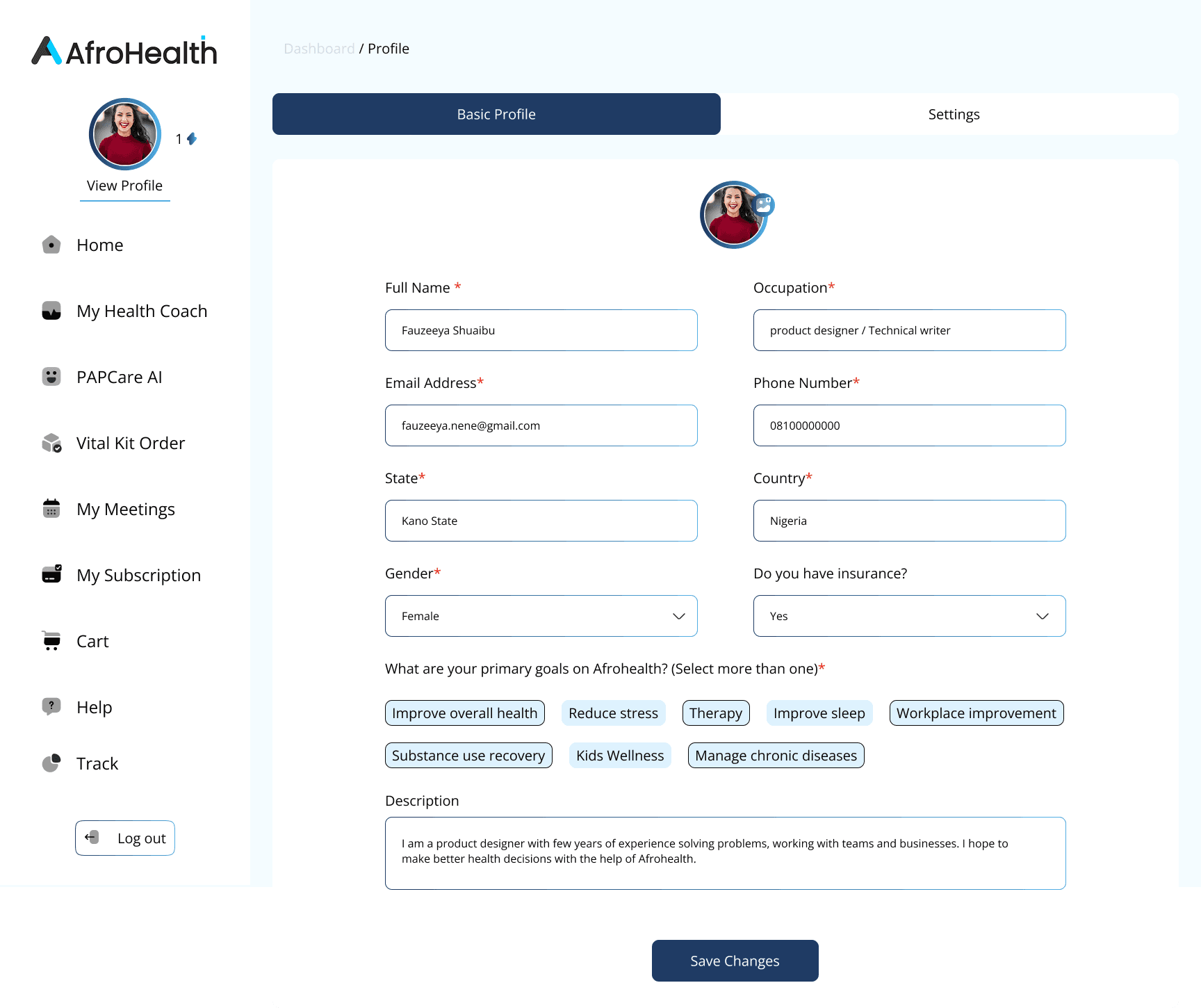
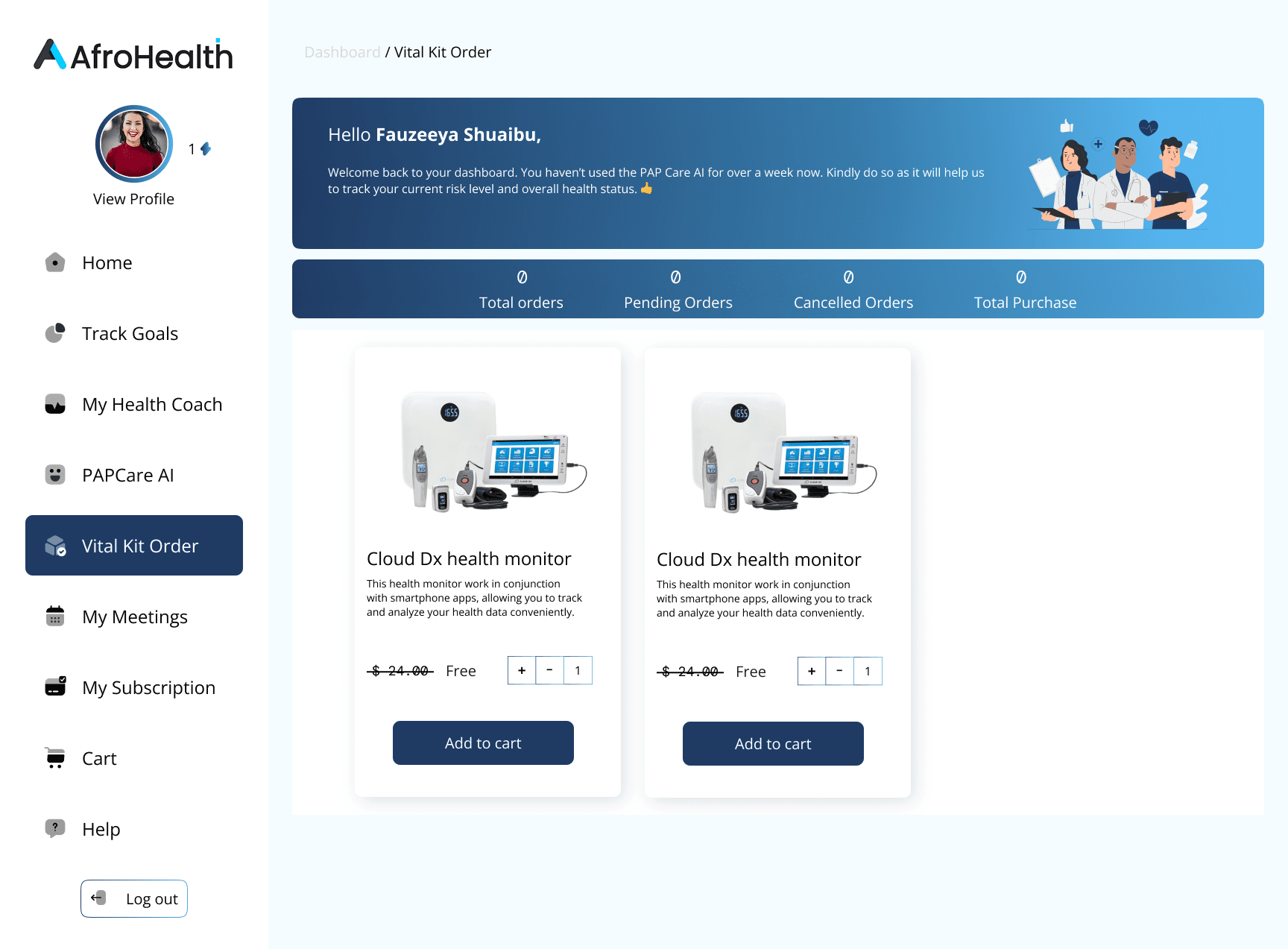
InsightThis version got AfroHealth.care into Google for Startups in 2023, where I led one of the workshop sessions.
V2: The training and jobs pipeline
A student dashboard, the learning platform, payments, and refer-and-earn, rebuilt in two months. Candidates train, get placed as CNAs in US care homes, and use a healthcare-only job platform from anywhere on the continent.
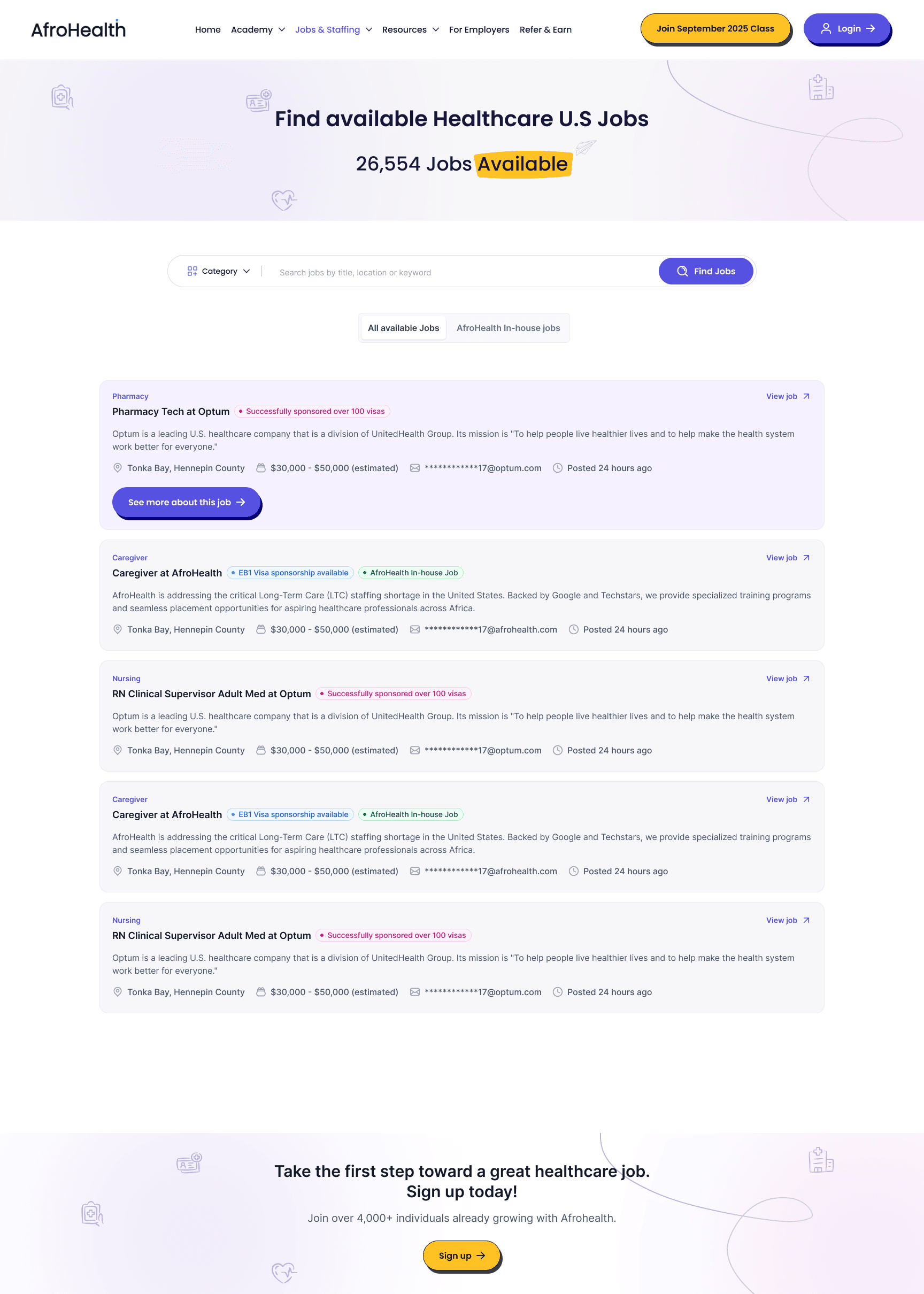
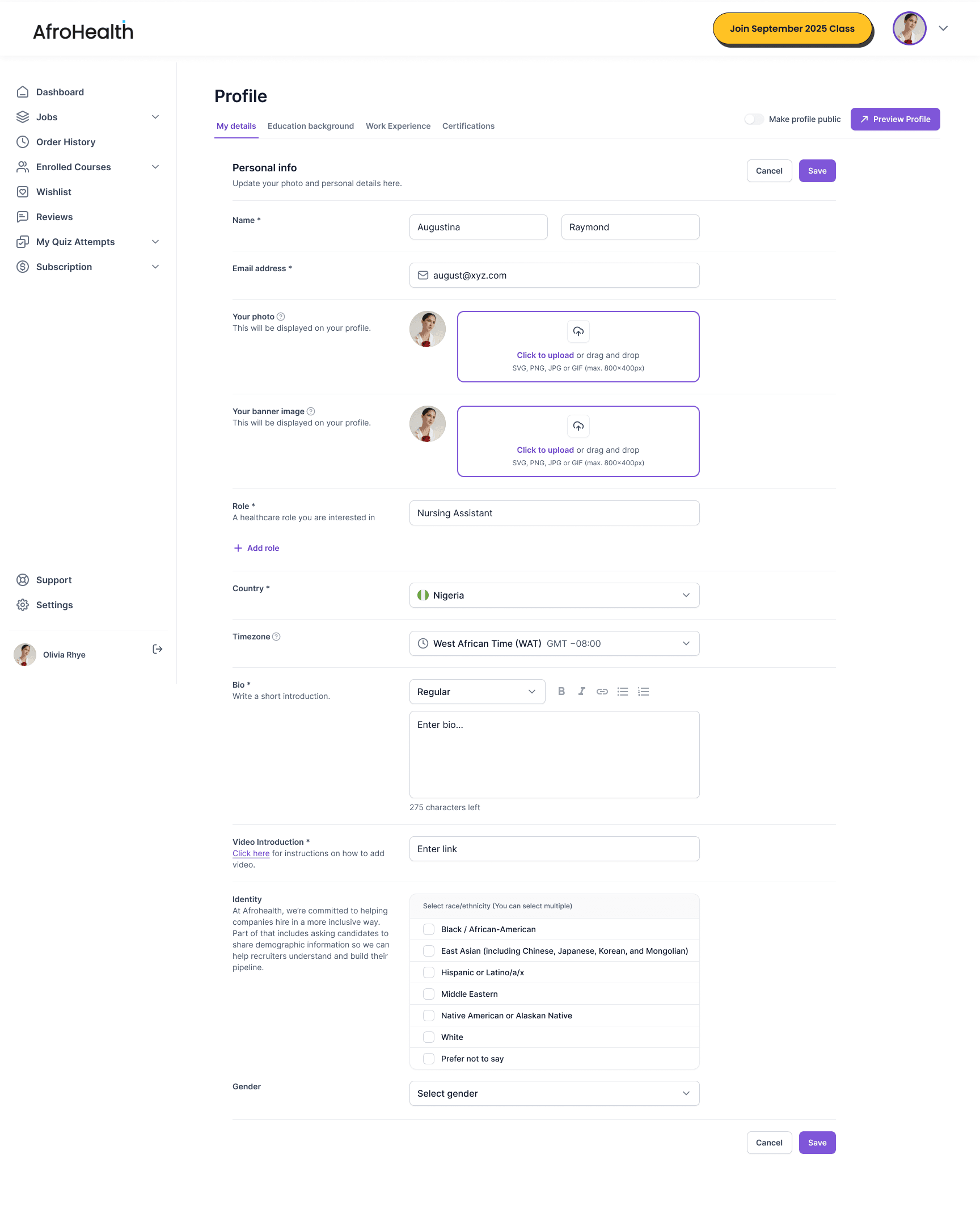
InsightPaying for a class is what unlocks the fuller job board, so the business model and the user's incentive point in the same direction.
Usability testing
No room for a formal study in two months, so I tested lean: walking the flow end to end with the co-founders and a few prospective students, on the phones they would actually use.
Results
- Students hesitated to pay without seeing what it unlocked, so the job board preview moved ahead of payment
- Refer-and-earn confused on first read, so it became one plain sentence and a single share action
- Most students were on low-end Android phones, so pages stayed light and forms short
Measuring success
Was the project successful and why?
Running, simply and steadily
AfroHealth.care runs at least 20 students per cohort, a new cohort every three months. It is not a complicated product, and it does not need to be. Full circle for me: one of my first products came back two years later, and the 2025 version reflected everything I had learned in between.
Metrics and KPIs
- At least 20 students per cohort, about four cohorts a year
- Accepted into Google for Startups in 2023, where I led a workshop session
20+
students per cohort
4
cohorts a year
Previous case study
← WorthsightNext case study
PrymeKids →