- EdTech
- Web
Redesigning PrymeKids' onboarding to grow sign-ups from 10 to 200+
A live-teaching platform connecting African tutors with diaspora children. We set out to sell academics and discovered we were selling cultural identity.
- My role
- Product Designer & Product Manager
- Date
- May 2026 - August 2026
- Platform
- Responsive Web Application
- Tools
- Figma
- Team
- Five of us: a developer, the stakeholder (also a developer), a graphics designer and content creator, and me
Chapter 01
Introduction
The product
PrymeKids started with one boy's report card. The founder hired a Nigerian math tutor for his son online; by six, the boy was the best in his class. PrymeKids gives other diaspora families the same thing: live classes with African tutors, piloted as a summer camp.
About the project
We built a teacher platform, an admin platform, and the parent-facing product at once. I wrote the requirements docs and designed the entire parent-facing experience, launching with five subjects including African Languages.
Chapter 02
Problem space
Problems to solve
Summers are a long, unstructured stretch
Kids either regress or binge cartoons. Diaspora parents had no structured way to turn that time into something valuable.
The real pain was not academics
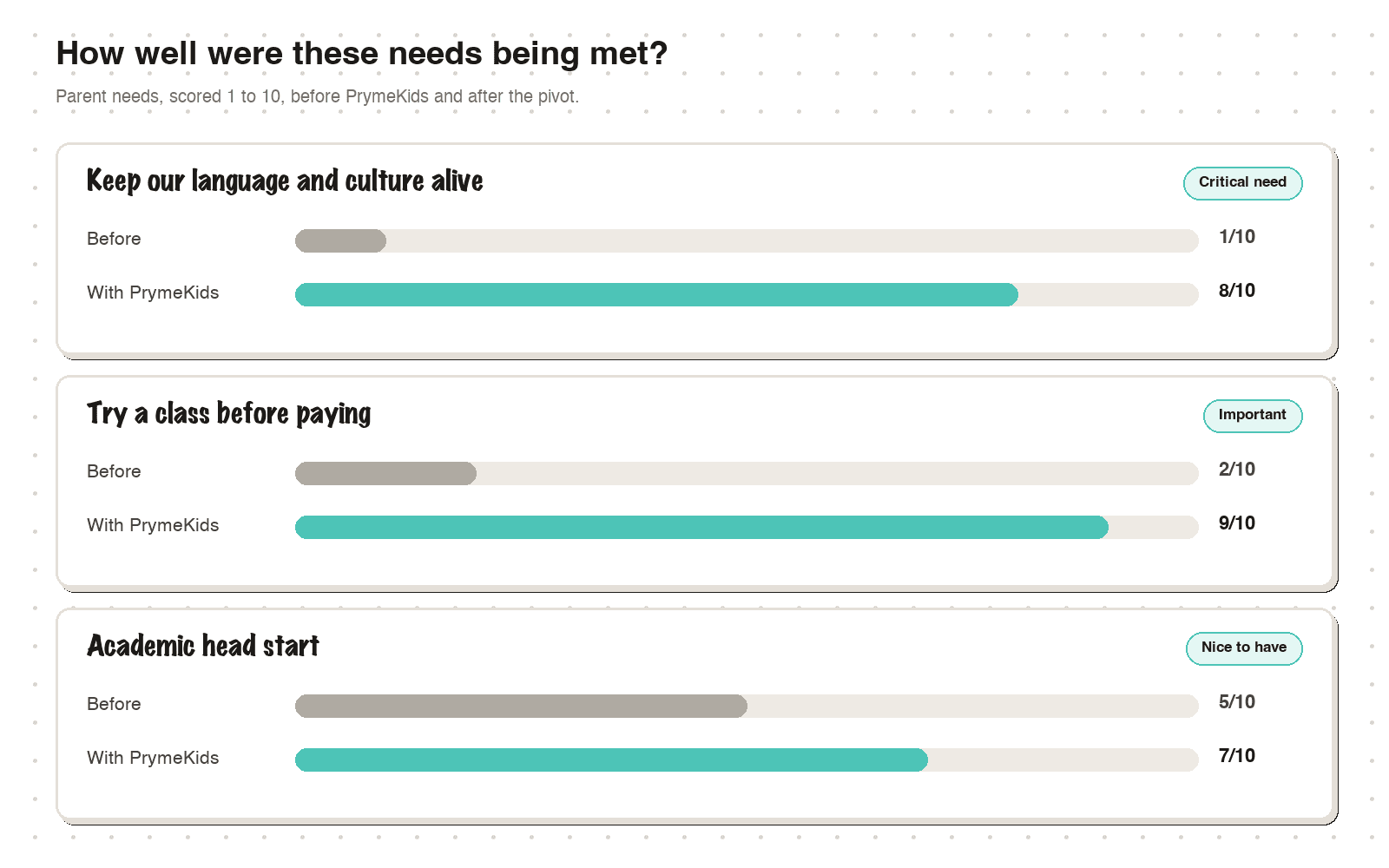
Parents were not worried about math. They were worried their kids would lose Yoruba, Igbo, or Hausa growing up abroad.
The subscription page was killing conversion
Sign-ups fell to one or two a week. Funnel data showed the drop-off: the moment we asked for money.
Why solve these problems?
Cultural identity is something school will never teach. Once we understood that was the real fear, the product had a much clearer reason to exist. And real demand still fails if the funnel asks for trust before earning it.
Goals
Company objective
Validate the summer camp pilot and grow sign-ups into paying subscribers
Project goals
- Launch the pilot with live classes parents could trust
- Find out what diaspora families would actually pay for
- Fix the drop-off in the enrollment funnel
- Feel trustworthy to an adult, warm to a four-year-old
Our users
Diaspora parents
They make the purchase decision, and what kept them up at night was their children losing their roots, not report cards.
Diaspora children
The actual students, some as young as four. The product had to feel warm and inviting at their level.
Jobs To Be Done
Keep my culture alive in my child
Language classes that connect kids to Yoruba, Igbo, Hausa, and more.
Turn screen time into something valuable
Live classes with real tutors instead of another cartoon.
Try before I pay
Experience a real class before making any financial commitment.
Chapter 03
Solution space
Exploratory research
User interviews
Who we interviewed
The founder spoke directly with parents from our first ten sign-ups
Our hypothesis
- Math and English would be the main draw (disproven)
- Parents would pay upfront for a camp they had not tried (disproven)
Learnings
- All ten of our first sign-ups picked African Languages. Not math. Not English.
- The real fear was kids losing Yoruba, Igbo, or Hausa growing up abroad
Solutions
ProblemSummers are a long, unstructured stretch
SolutionLive classes with African tutors, taken from home, on flexible schedules.
ProblemThe real pain was not academics
SolutionWe bet on the insight: a dedicated African Languages landing page with ads pointed at it, then four language tracks.
ProblemThe subscription page was killing conversion
SolutionThree funnel iterations, ending with pricing removed from onboarding entirely.
User flow
Iteration 1: Pay first
Users had to choose and pay for a plan before getting any access at all.
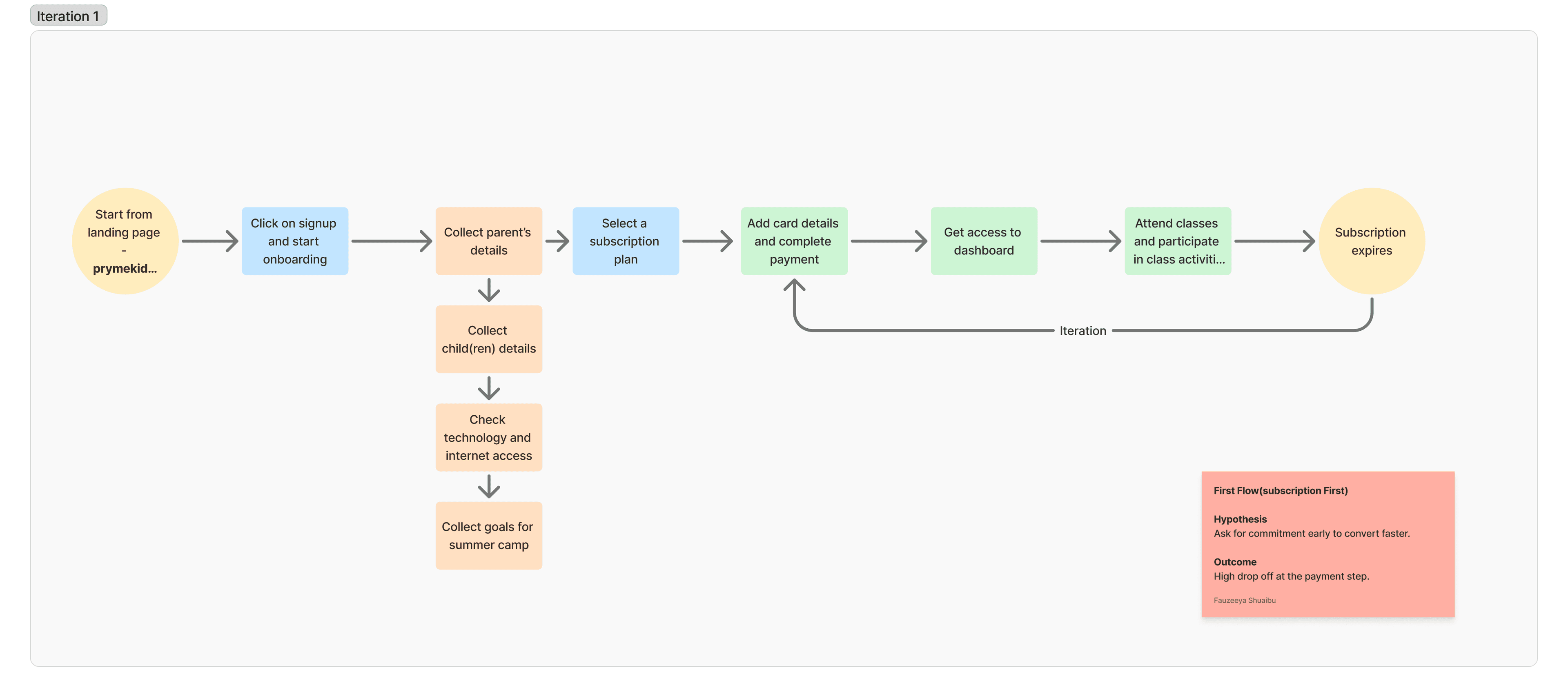
InsightNobody pays for something they have not experienced. Drop-off concentrated exactly at the subscription page.
Iteration 2: Free plan, then upgrade
We kept the pricing page but added a $0 tier: book a free class, attend, then decide.
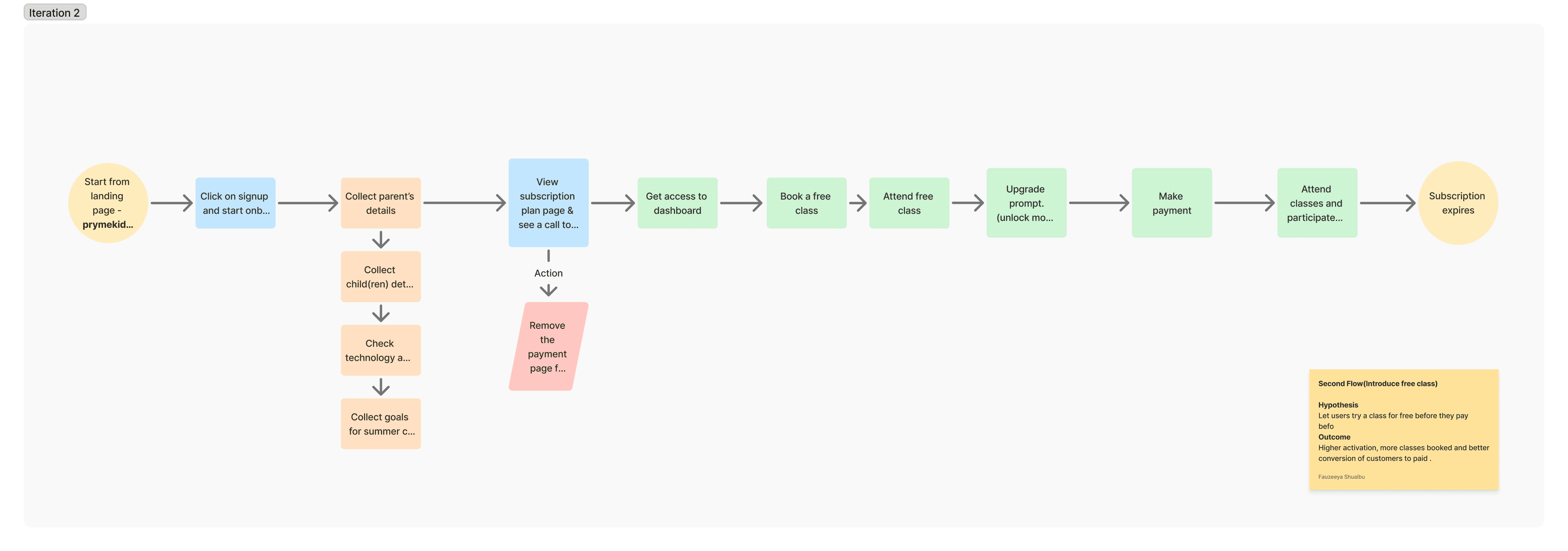
InsightIt helped, but users still dropped off before picking any plan, even a free one. The pricing page itself was the friction.
Iteration 3: No pricing page at all
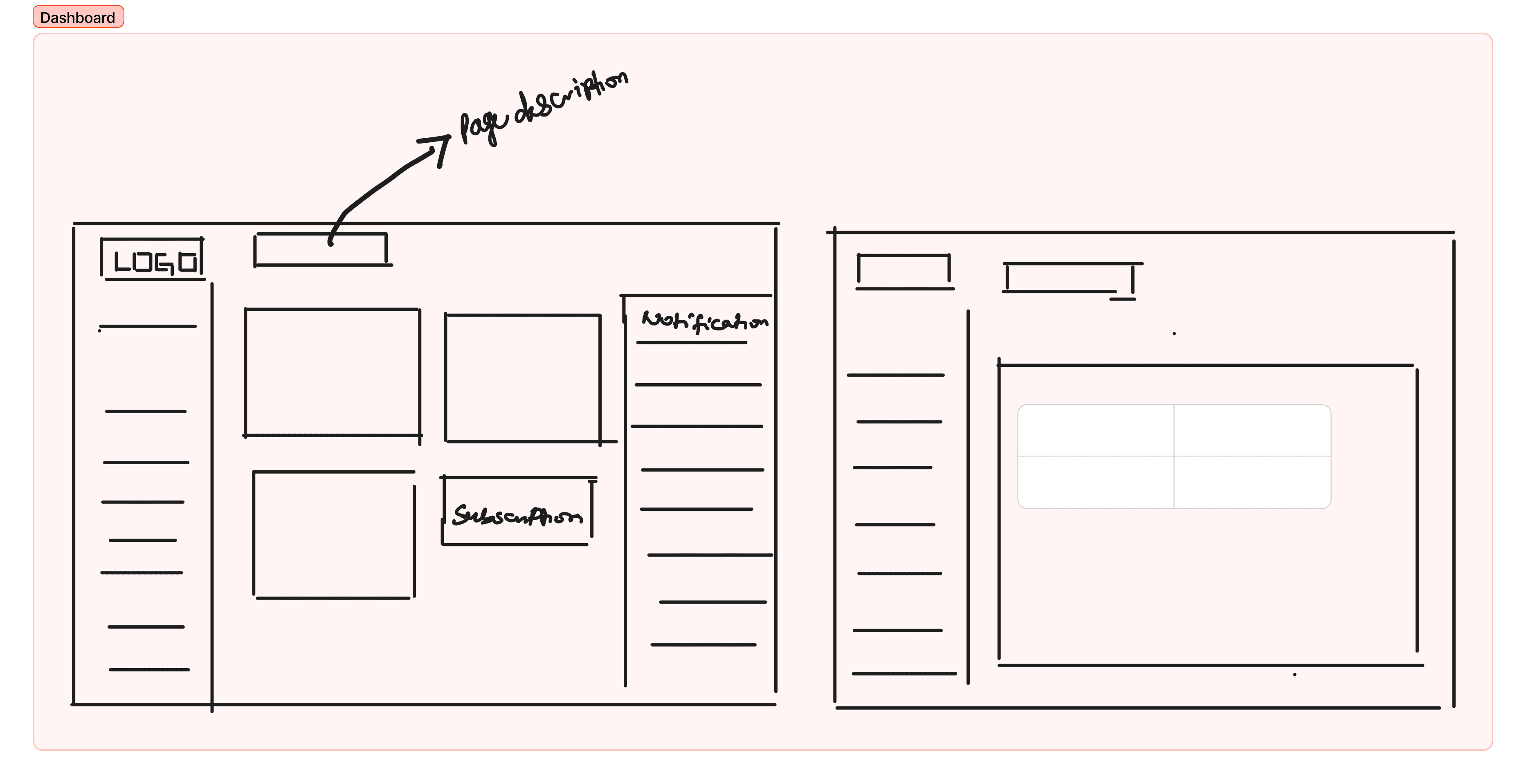
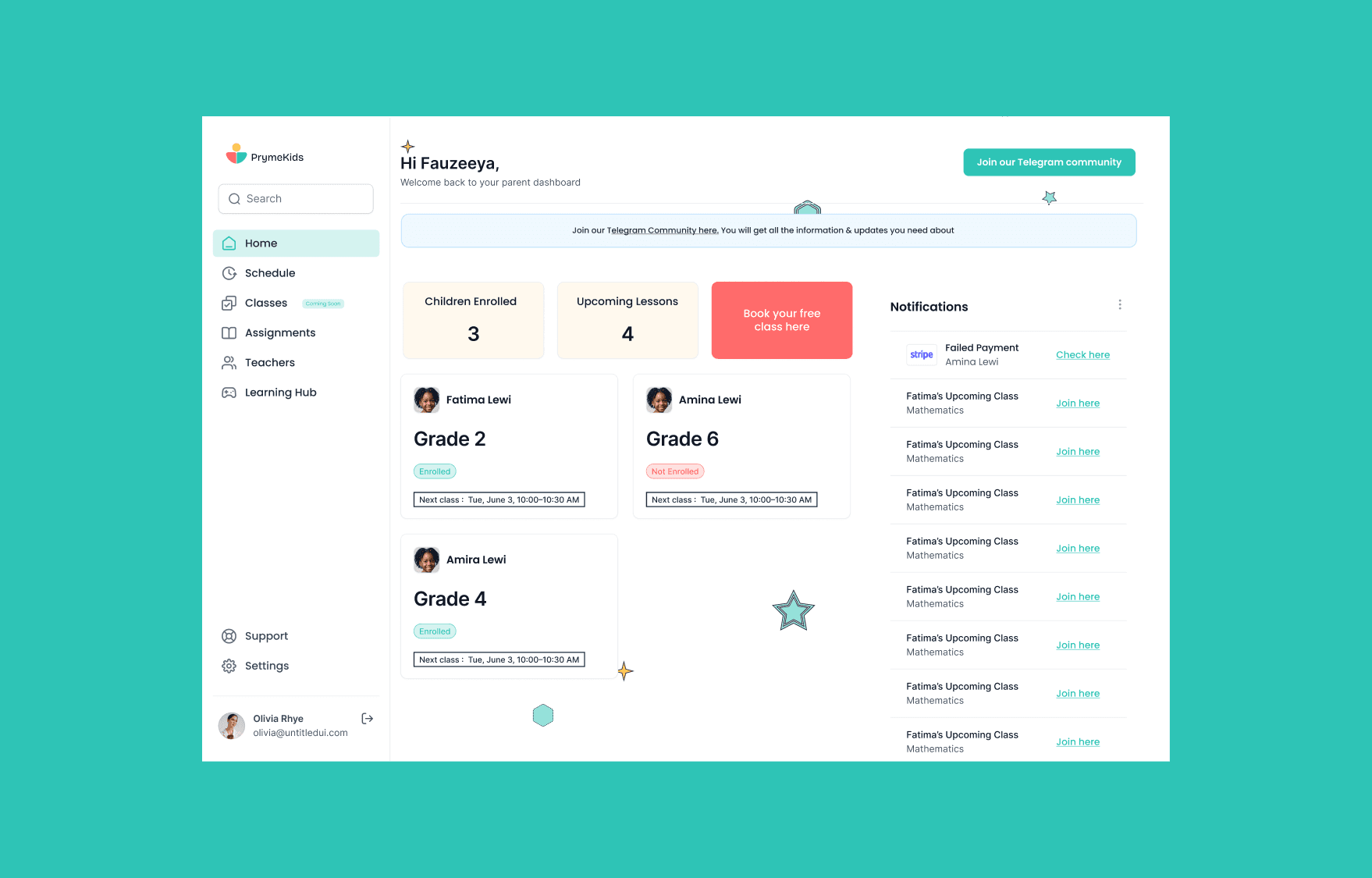
Sign up, land straight in the dashboard, book your free class. Plans only appear after the class, by email and in-app.
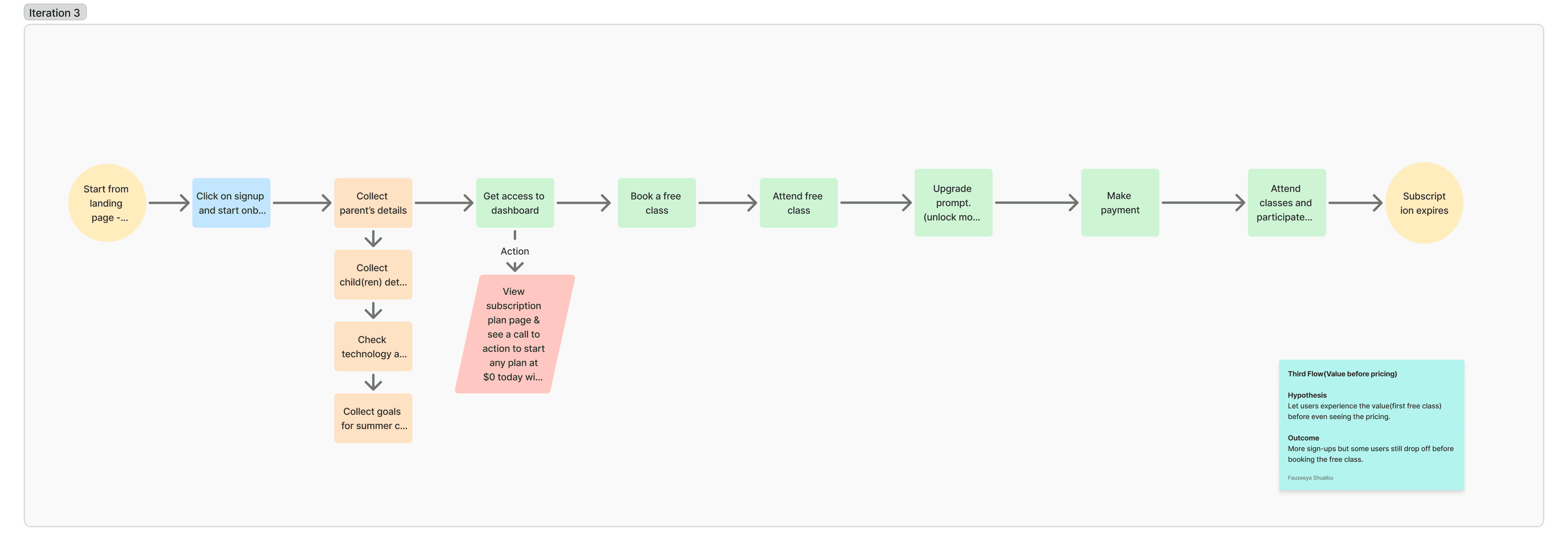
InsightThis is what worked: 200+ total sign-ups with recurring customers through the camp. The purchase decision now arrived right after parents experienced the value.
Low-fidelity exploration
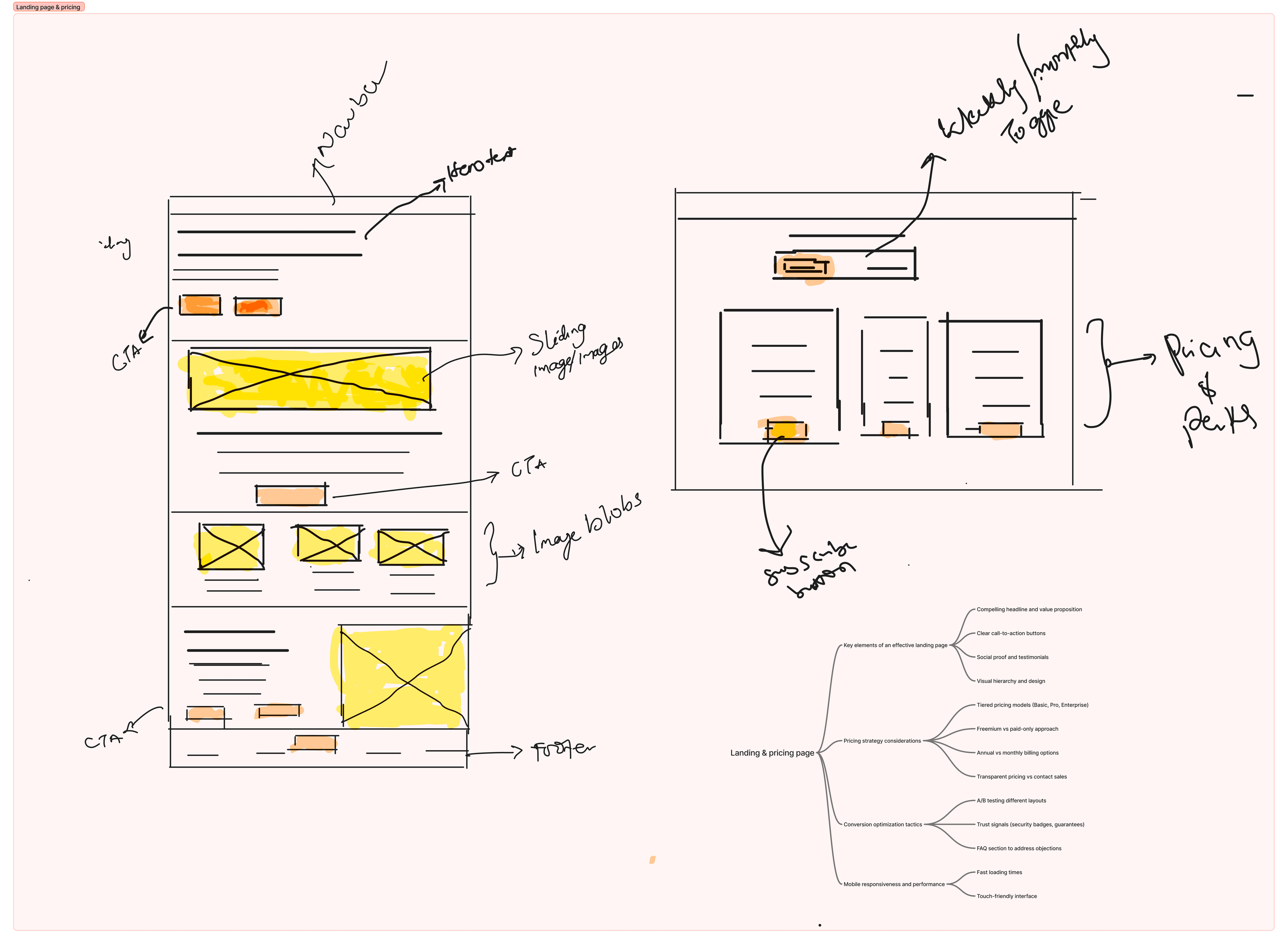
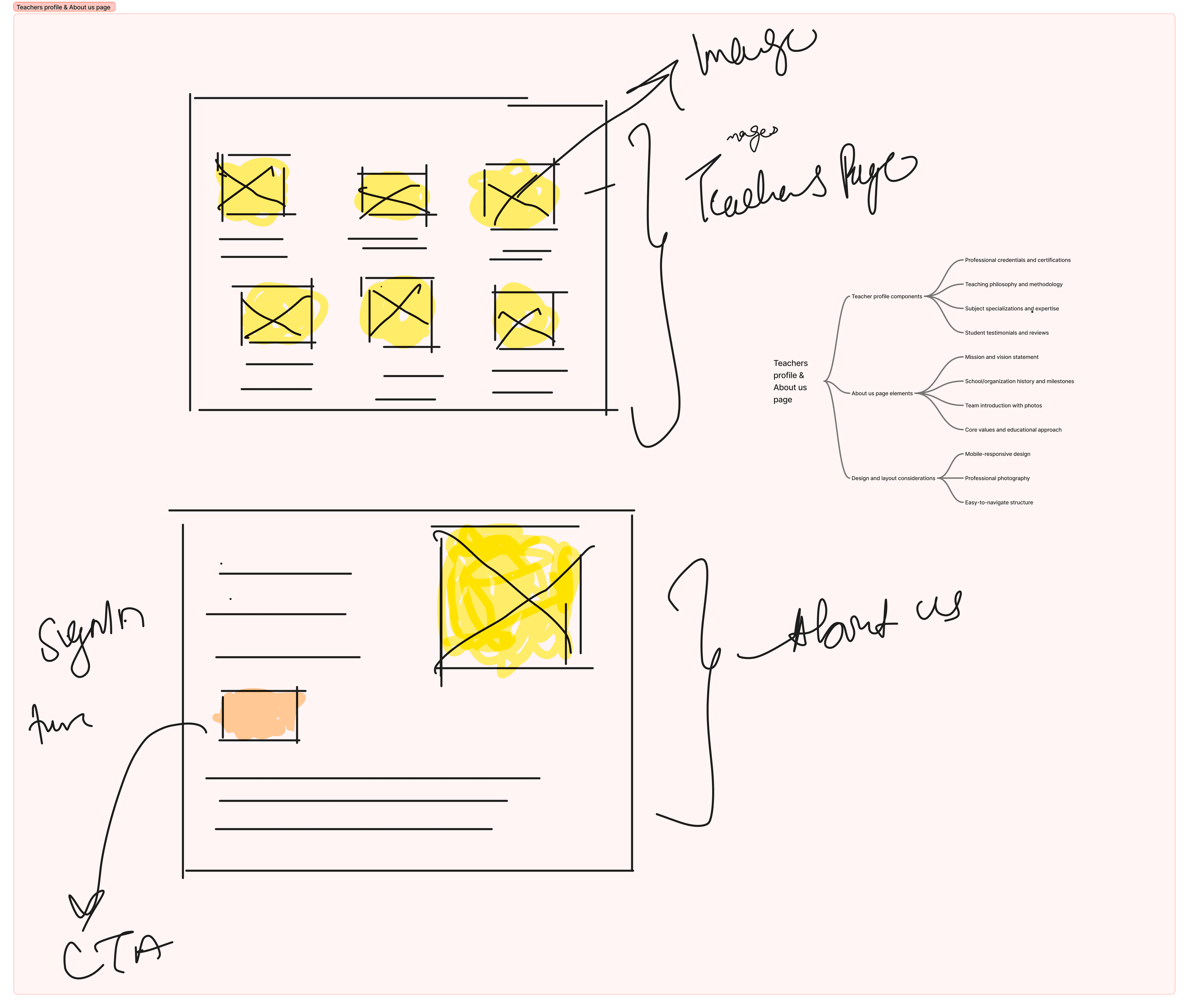
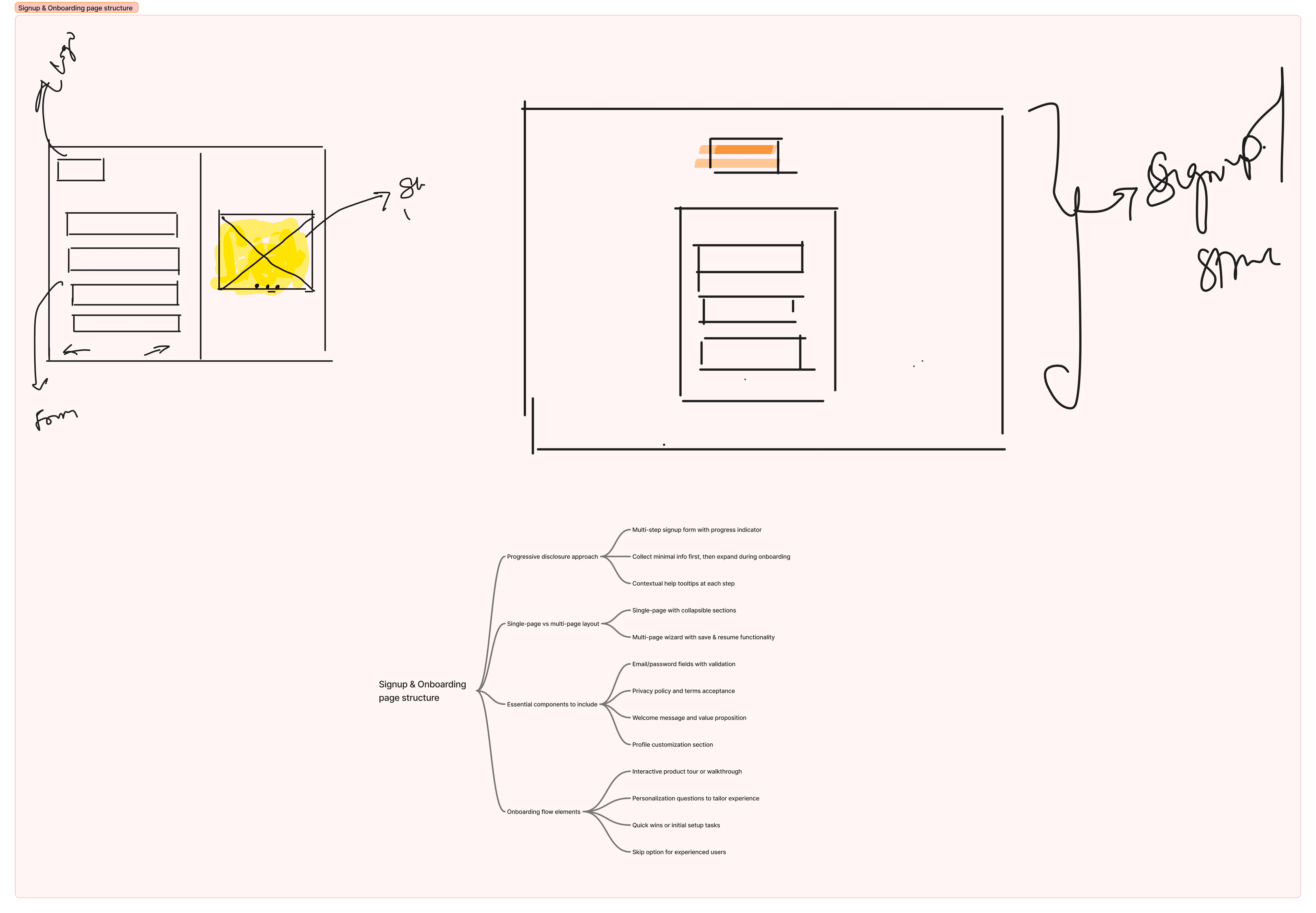
Low-fidelity wireframes aligned us on direction before polish. Every screen had to read trustworthy to an adult and warm to a four-year-old.
High-fidelity design
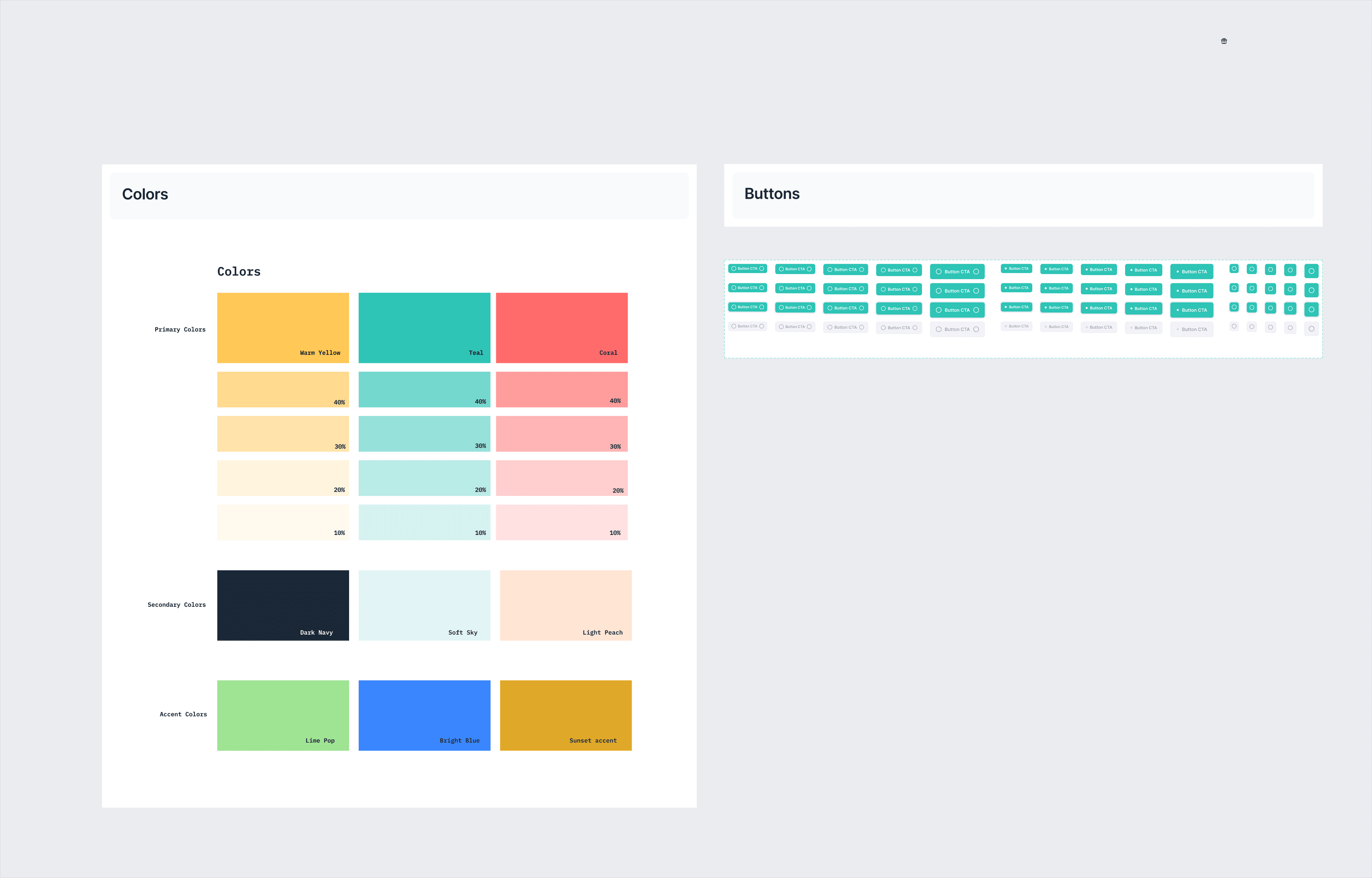
High-fidelity screens refined through several rounds of feedback, with a palette chosen for how color reads at four years old.
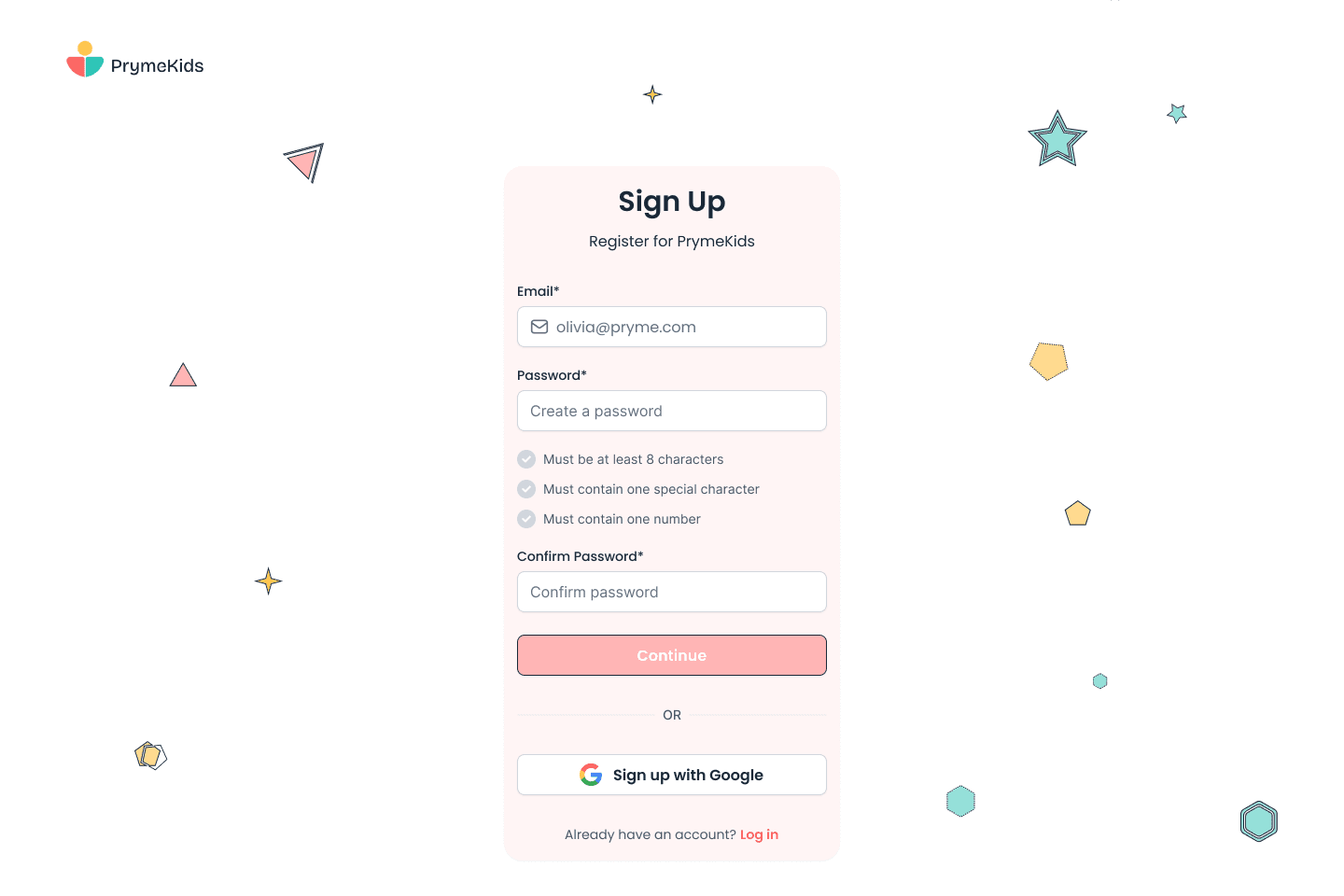
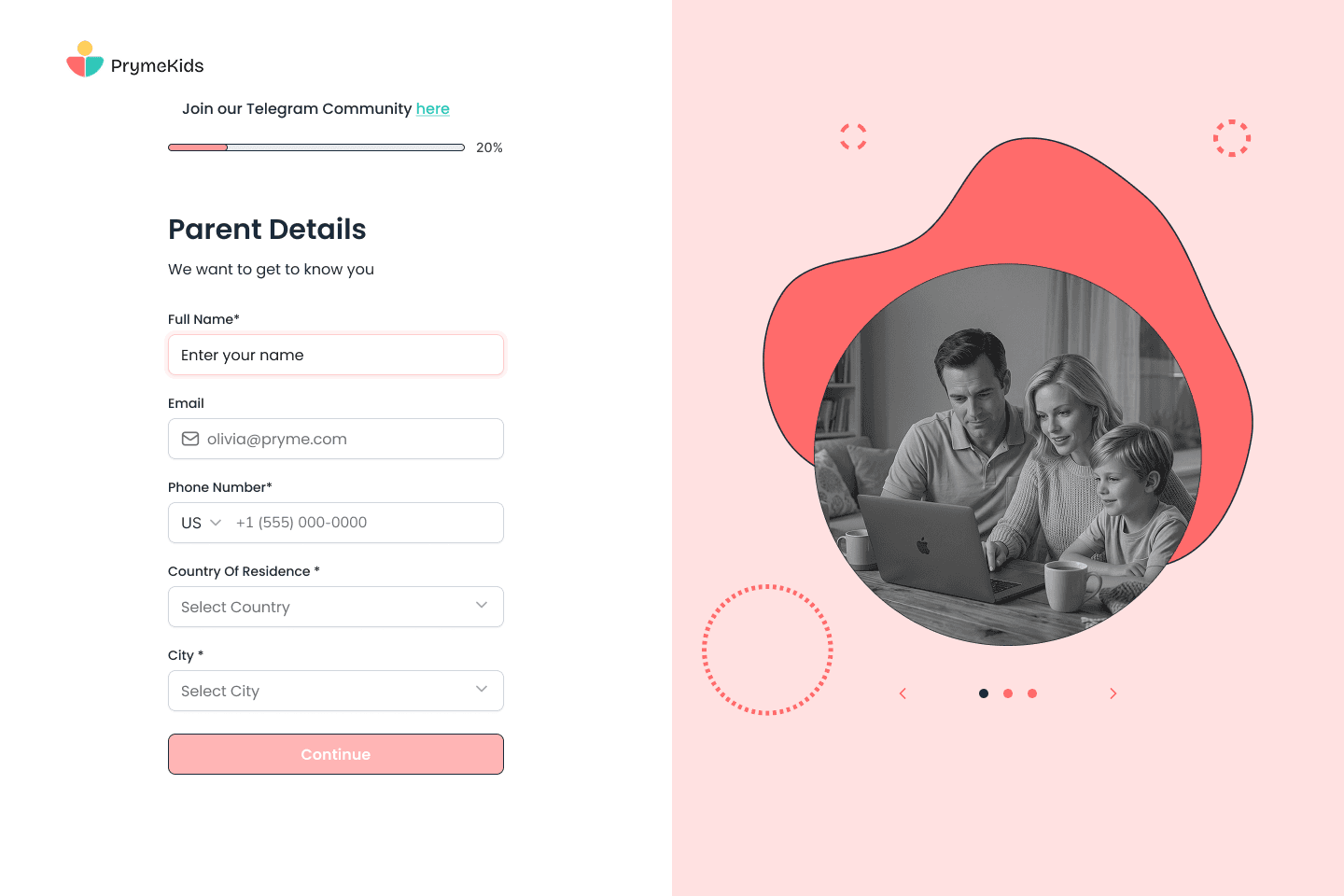
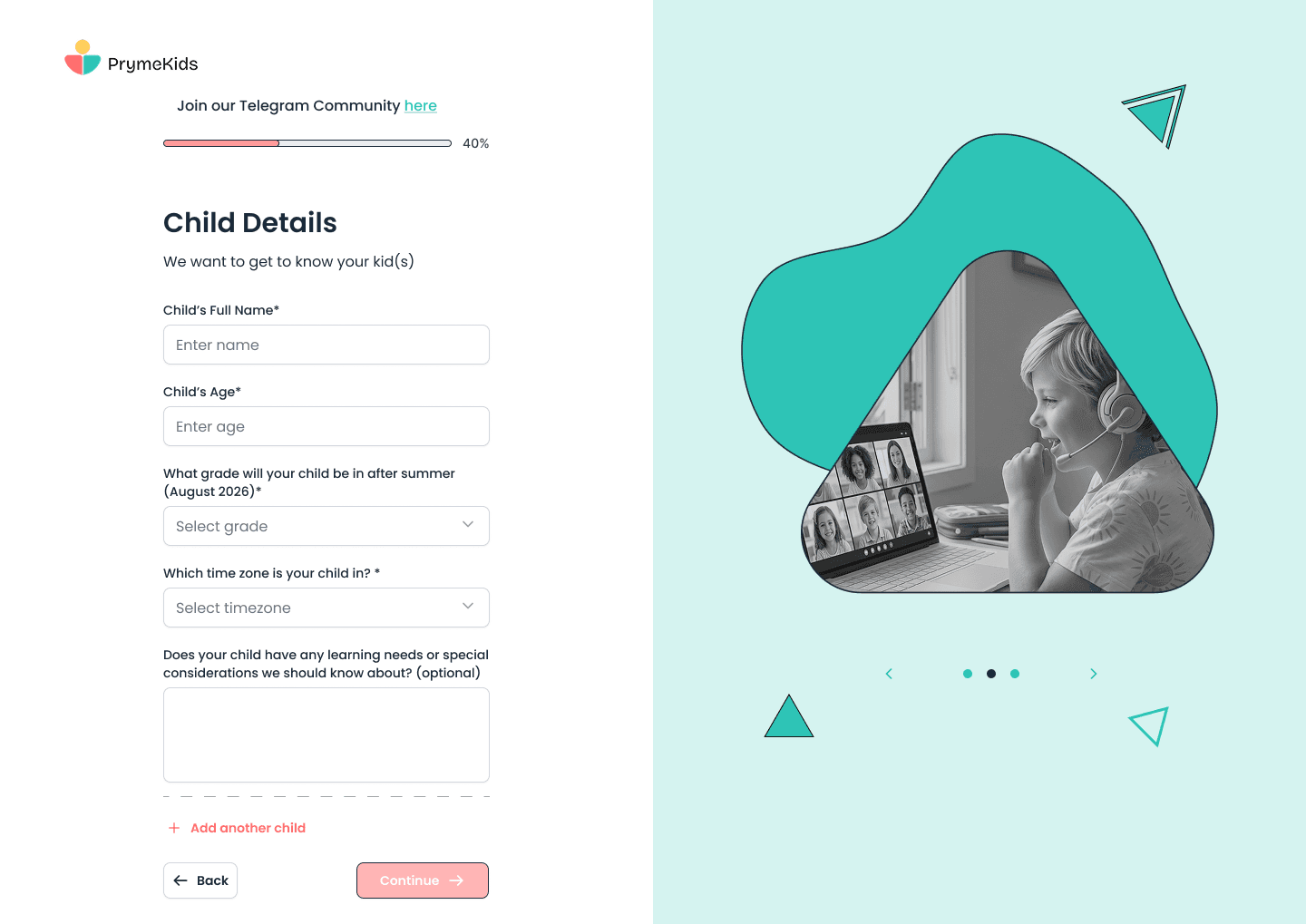
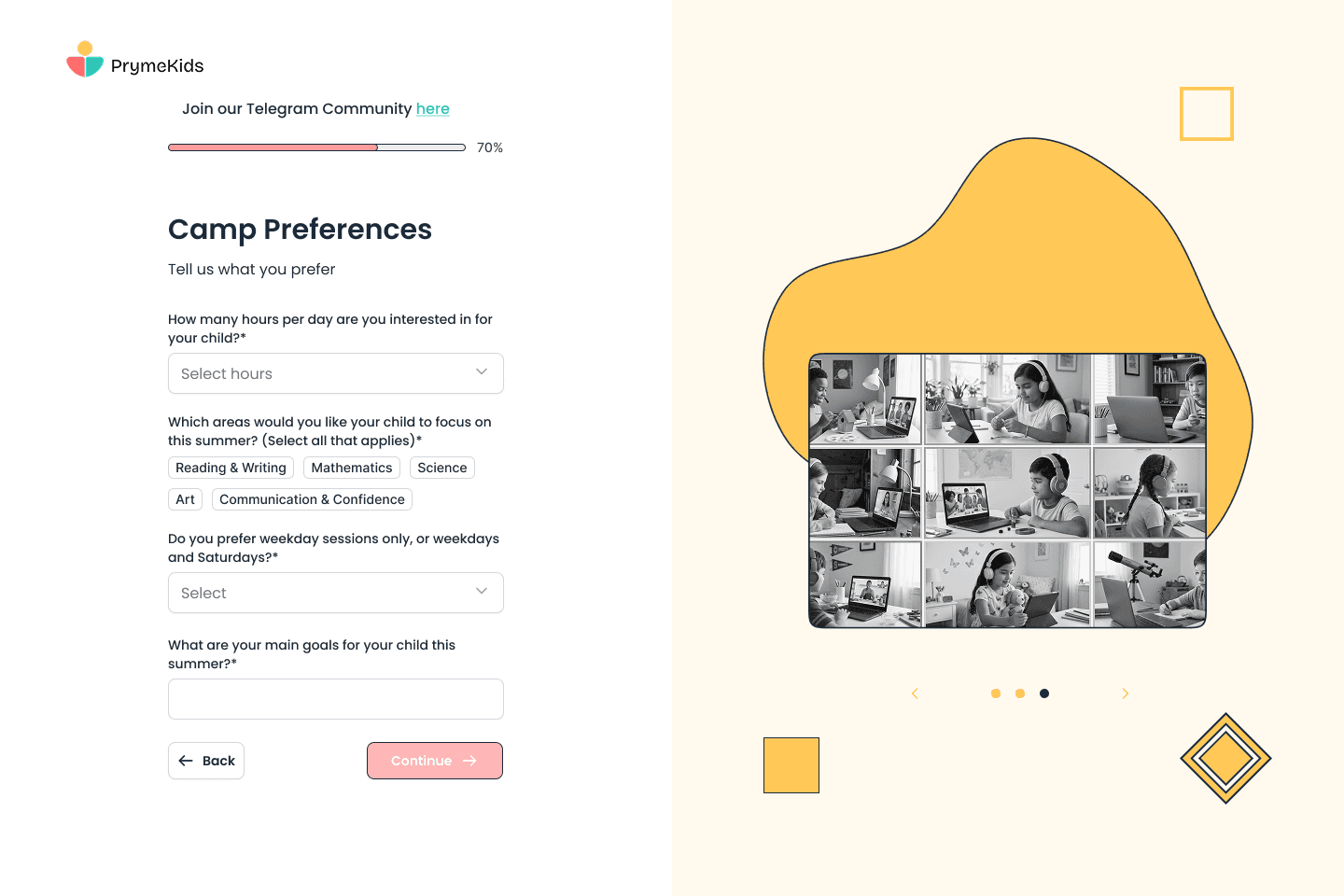
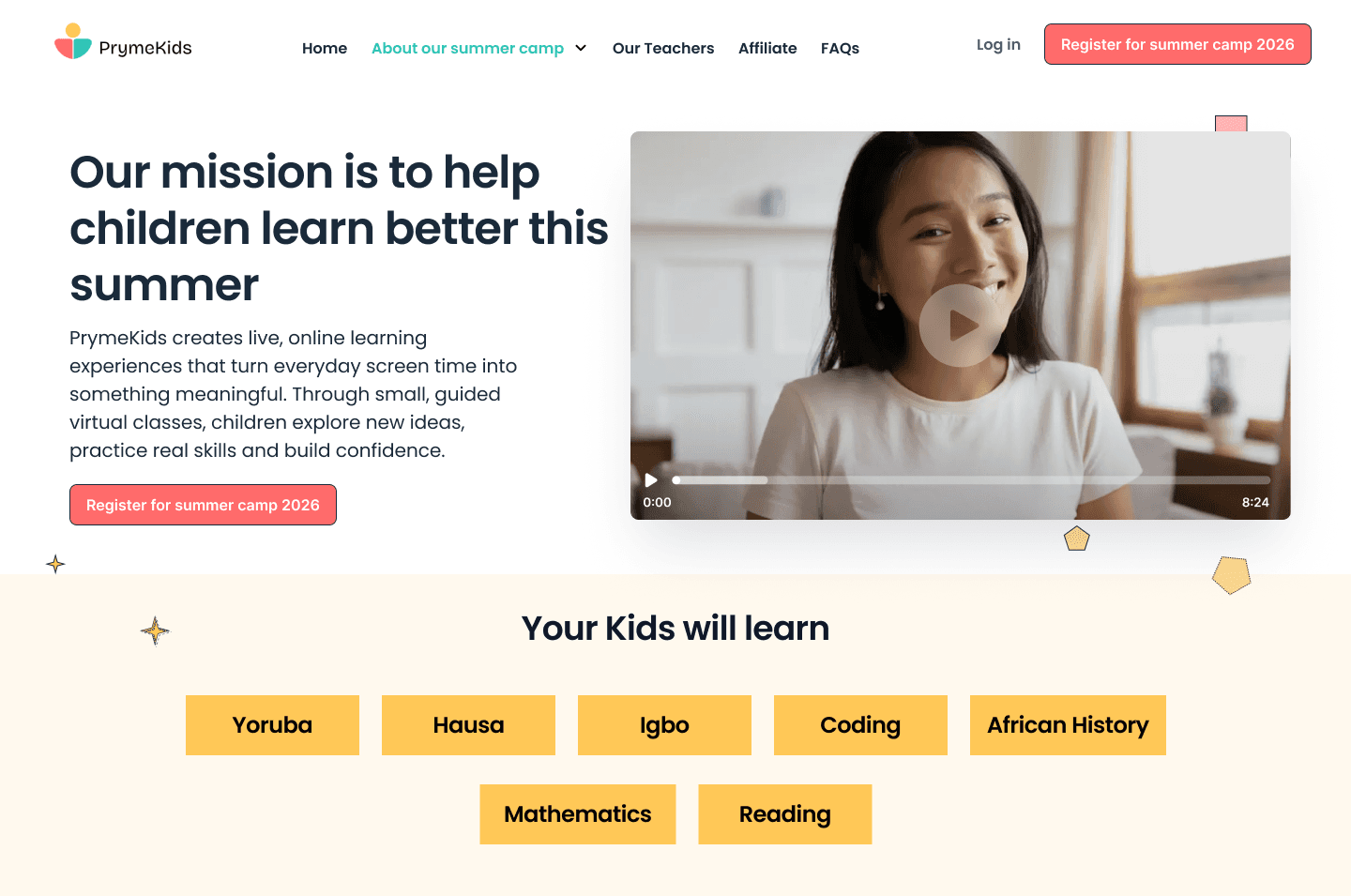
Prototype (recording)
Design system
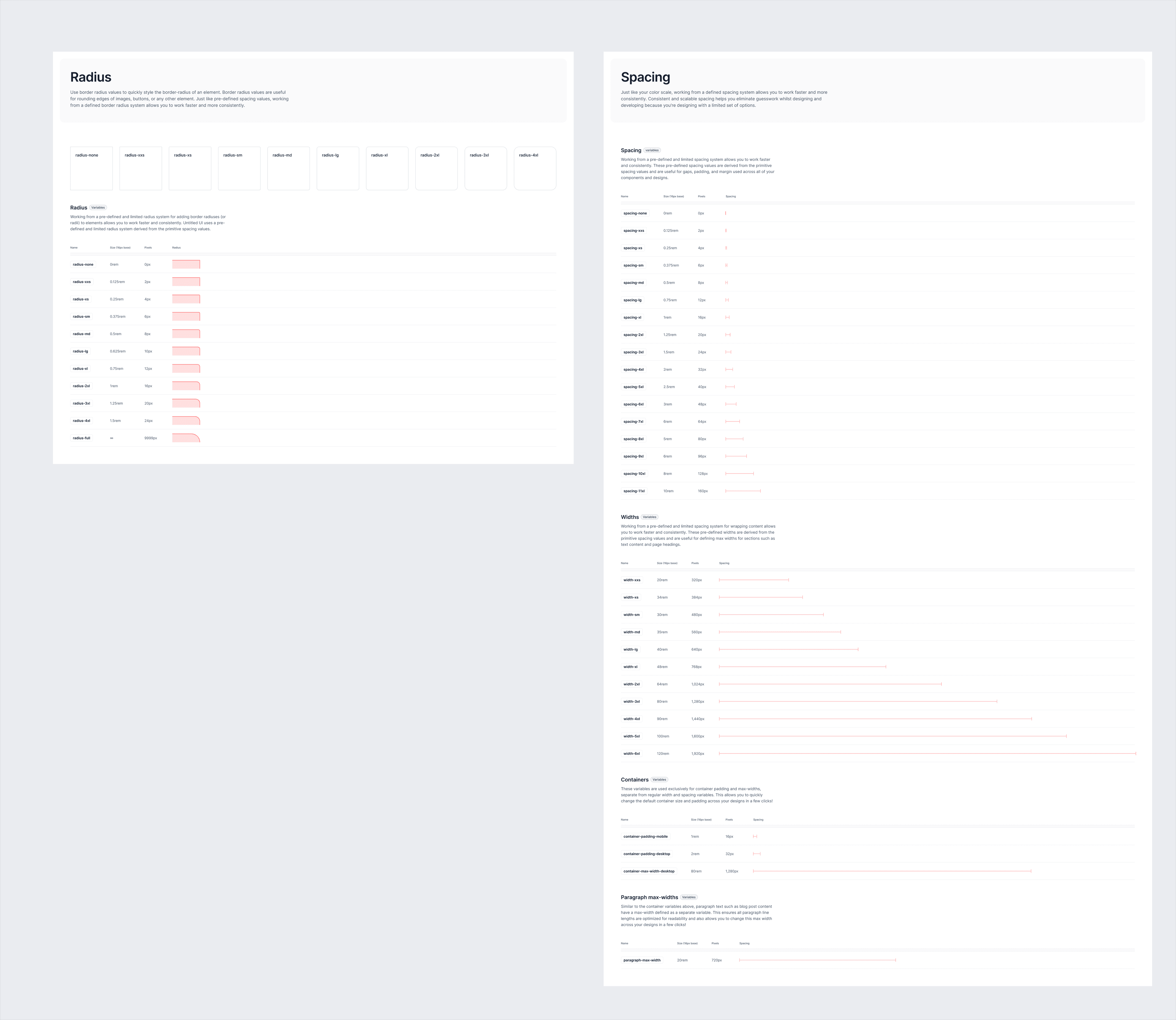
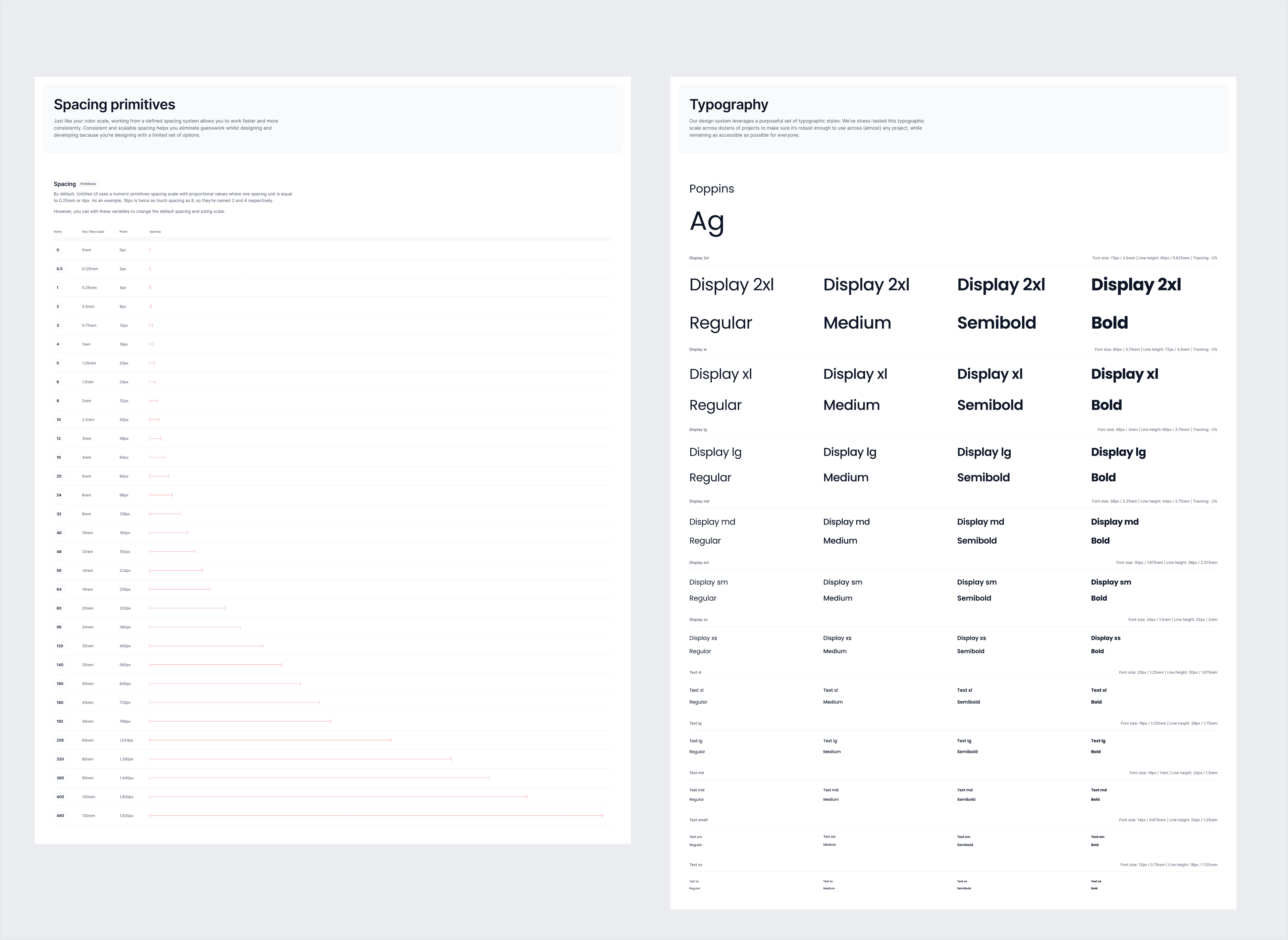
A lightweight system: core components and a deliberate palette, enough to keep five people fast and consistent.
Usability testing
We tested the key flows with two parents before launch, from landing page to completed sign-up.
Results
- The form asked too much up front, so we cut it to essentials and moved the rest to after first contact
- Parents looked for the language choice first, so the flow now leads with it
- Neither parent knew what happened after submitting, so we added a clear what-happens-next confirmation
Measuring success
Was the project successful and why?
Validation, with an honest asterisk
200+ sign-ups was validation, but only about 10 became paying customers. Sign-ups prove people want to try; they do not prove people will pay. That gap is the next problem to solve. The project also stretched me past design: I proposed the language pivot and pushed the funnel changes alongside the founder.
Metrics and KPIs
- First cohort: 10 sign-ups, all of them African Languages
- About 100 sign-ups in the week after the pivot
- 200+ total sign-ups with recurring customers after the funnel redesign
- Around 10 paying conversions
200+
pilot sign-ups
100
sign-ups in one week after the pivot
Future vision / next steps
- A gamified, Duolingo-style hub for self-paced African language learning
- Voice and audio training to make self-paced learning actually work
- Twi as the next language track
Chapter 04
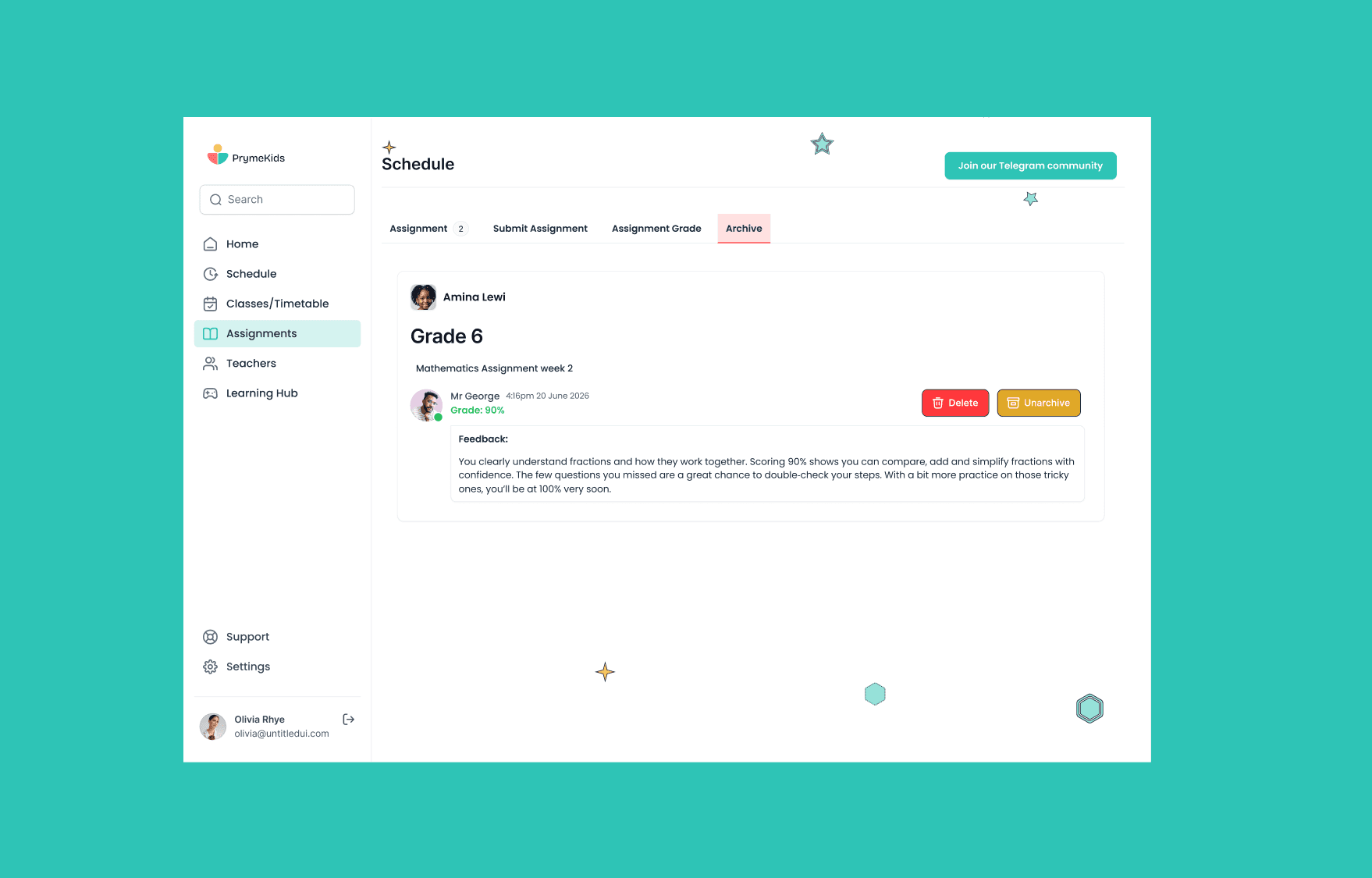
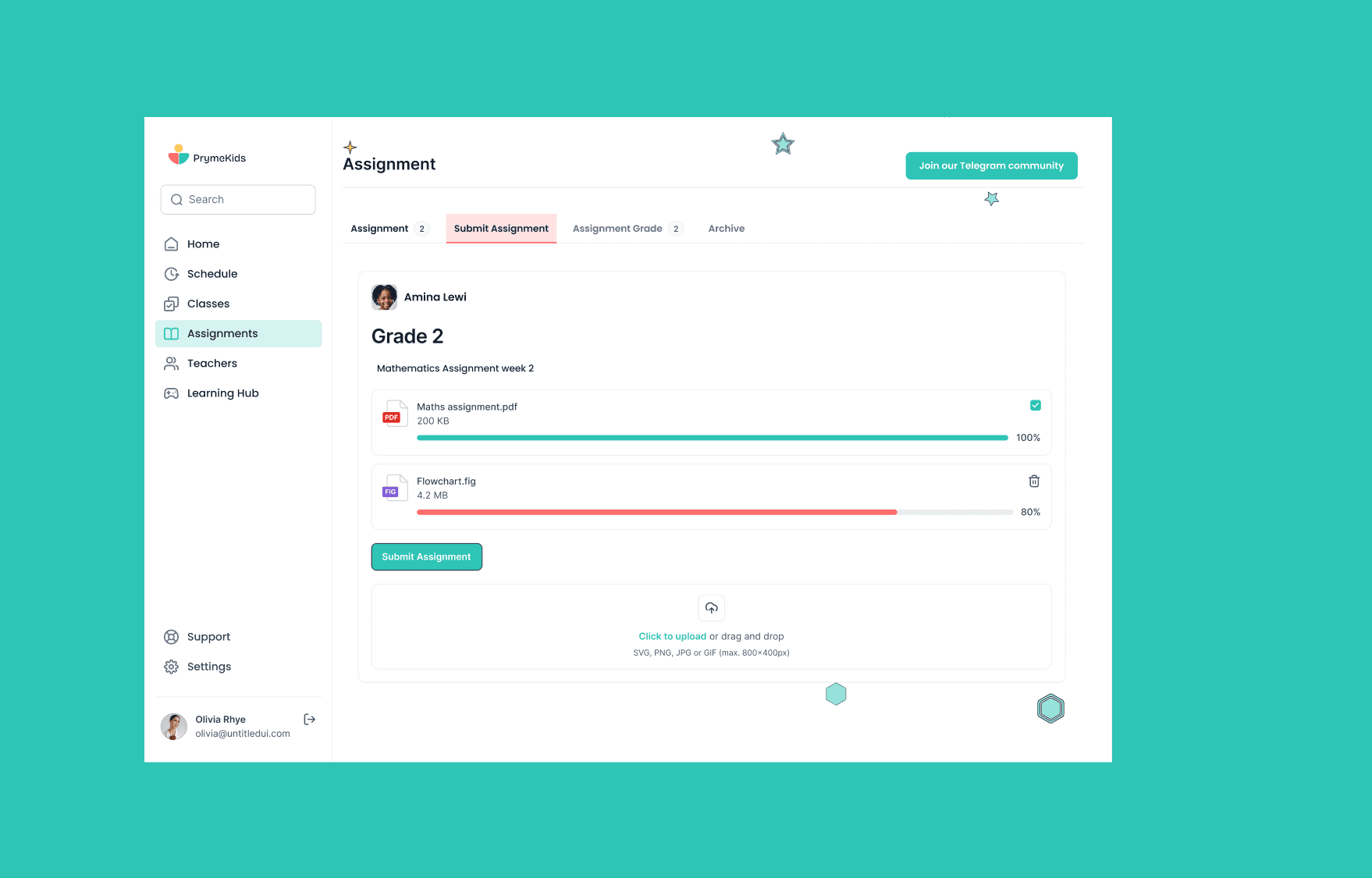
Final designs
Previous case study
← AfroHealthNext case study
Xel Care →