- Healthcare EdTech
- AI
Designing a university run entirely by AI agents
A free healthcare education platform run end to end by AI agents: free tuition, a refundable deposit, and a commitment to finish.
- My role
- Product Designer & Product Manager
- Date
- February 2026 - May 2026
- Platform
- Responsive Web Application
- Tools
- Figma, Figma Make, FigJam, Figma Slides, Notion
- Team
- Five of us: the stakeholder, an AI engineer, a front end developer, a second tester, and me
Chapter 01
Introduction
The product
Many people want a healthcare career and cannot afford the training, so they take loans they struggle to repay. Xel.care removes the trade-off: free CNA training, no tuition, no loan. In exchange, students commit to finishing and working once certified.
About the project
There is no admissions office, registrar, or instructor; every one of those roles is an AI agent. My job was the map that connects them: who talks to whom, and when.
Chapter 02
Problem space
Problems to solve
Healthcare education pushes people into debt
Tuition costs force aspiring CNAs into loans that many cannot repay, even after they qualify.
Free invites disengagement
People tend to drop things they have not paid for. A free education model lives or dies on whether students actually follow through.
Nobody had built this before
An education platform run end to end by AI agents was new territory for everyone, including the AI engineer.
Why solve these problems?
If free, AI-run education could reliably produce working CNAs, the model could remove the cost barrier for a whole career path, then repeat in other fields. Everything hinged on commitment and coordination, which are design problems as much as engineering ones.
Goals
Company objective
Prove that free, AI-run education with deposit-backed commitment could produce working CNAs
Project goals
- Design the full agent flow, from admissions to licensing
- Keep students committed to a program they get for free
- Take a student from application to certification to placement
- Make talking to an AI agent feel as natural as talking to staff
Our users
Aspiring CNAs
People who want a foothold in healthcare without debt. Research later showed many were drawn more to a stable paycheck than to care work, which ended up steering the product's direction.
Jobs To Be Done
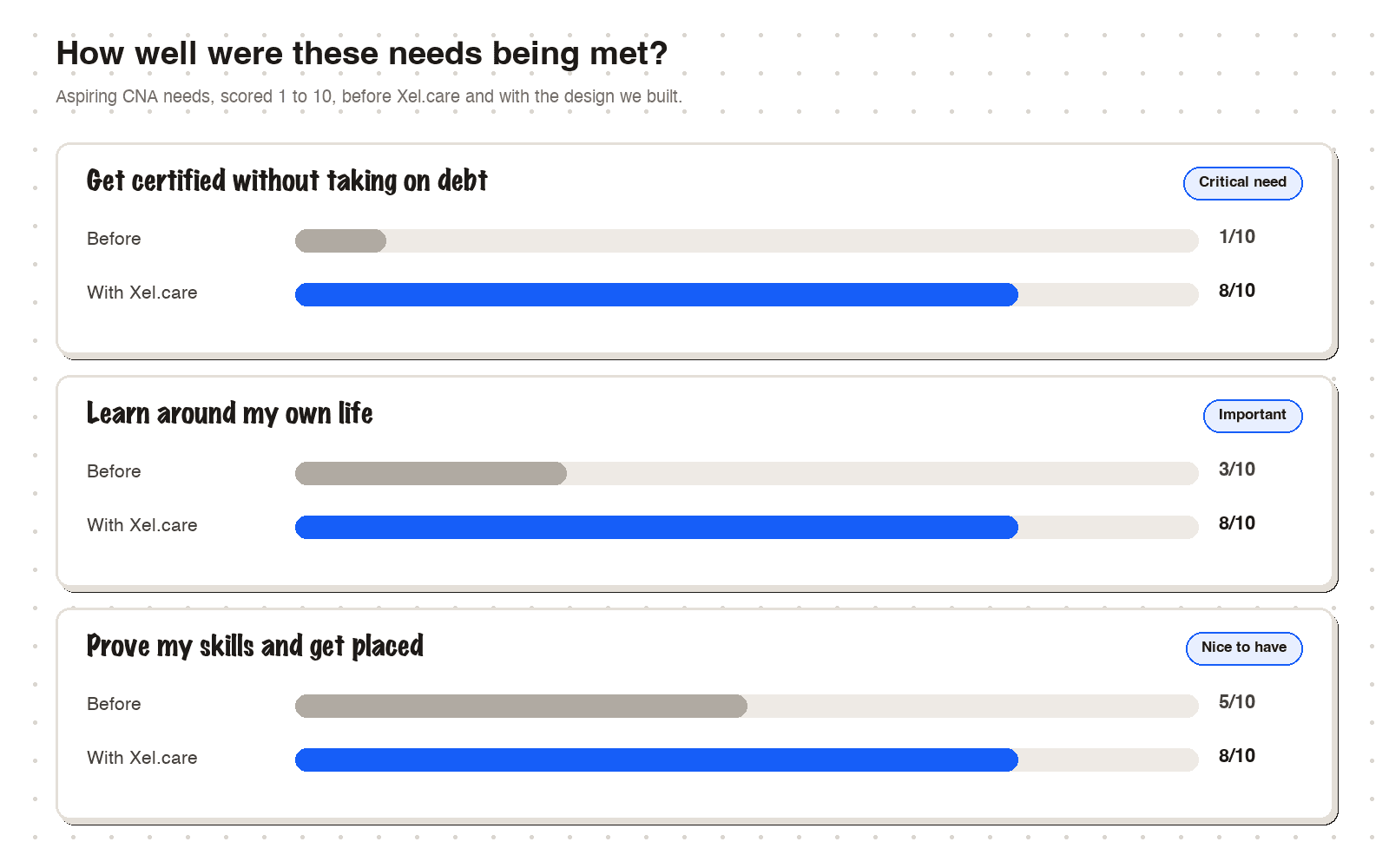
Get certified without taking on debt
Free tuition with a refundable $250 deposit instead of a loan.
Learn around my own life
The General Course Agent builds each student's timetable around their availability.
Prove my skills and get placed
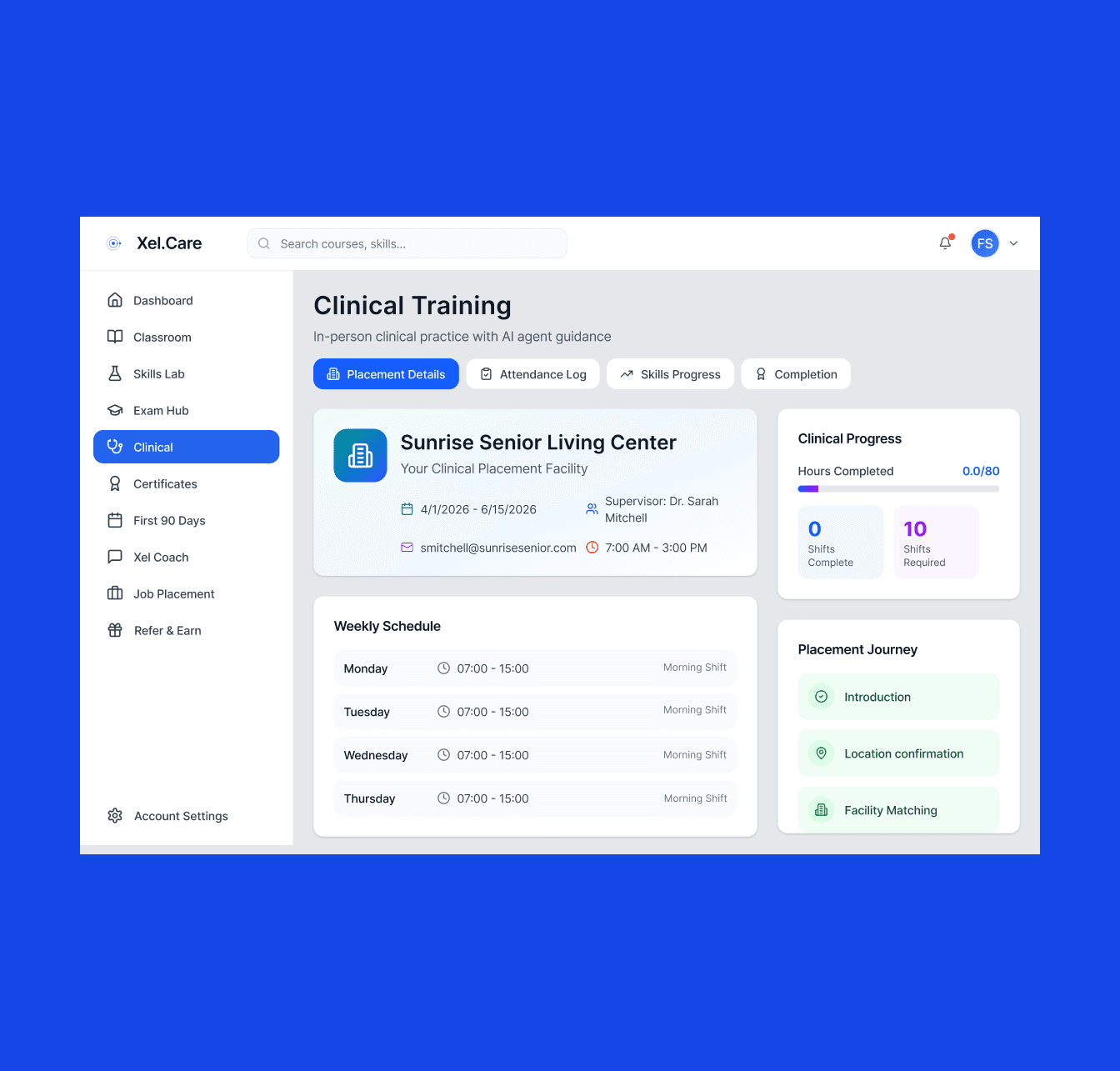
Micro-skill scoring with required retests, then matching to a real placement nearby.
Chapter 03
Solution space
Exploratory research
User interviews
Who we interviewed
We spoke with prospective CNA students throughout the project
Our hypothesis
- People who want CNA careers are blocked mainly by cost (only partly true, it turned out)
Learnings
- Most people interested in a CNA path were drawn to a stable paycheck, not to healthcare itself
- A passion gap is much harder to close than an access or cost gap
Solutions
ProblemHealthcare education pushes people into debt
SolutionCompletely free CNA training run by AI agents: admissions, enrollment, coursework, licensing prep, and placement in one flow.
ProblemFree invites disengagement
SolutionA refundable $250 deposit. Not about the money; about making sure people who enrolled meant it.
ProblemNobody had built this before
SolutionWe figured it out stage by stage, testing each agent as it came online and trading scope openly when something would not ship in time.
User flow
The agent map
A Lead Orchestrator holds each student's record end to end. Below it, agents hand off in sequence: Admissions interviews and decides, Enrollment collects the $250 deposit, the General Course Agent builds timetables and rolls grades into a GPA, Placements matches certified students to real placements, and the License Agent preps them for the exam.
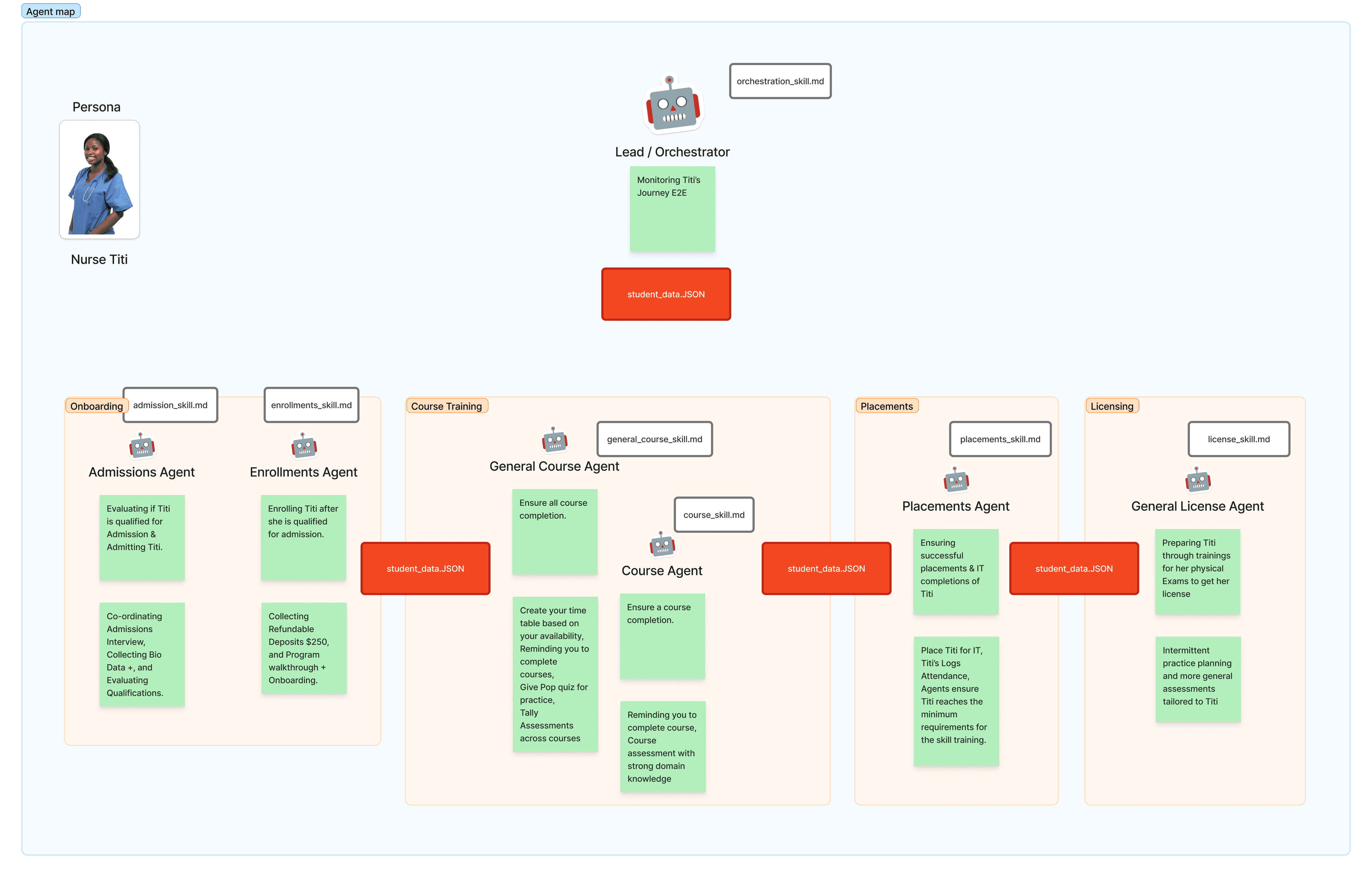
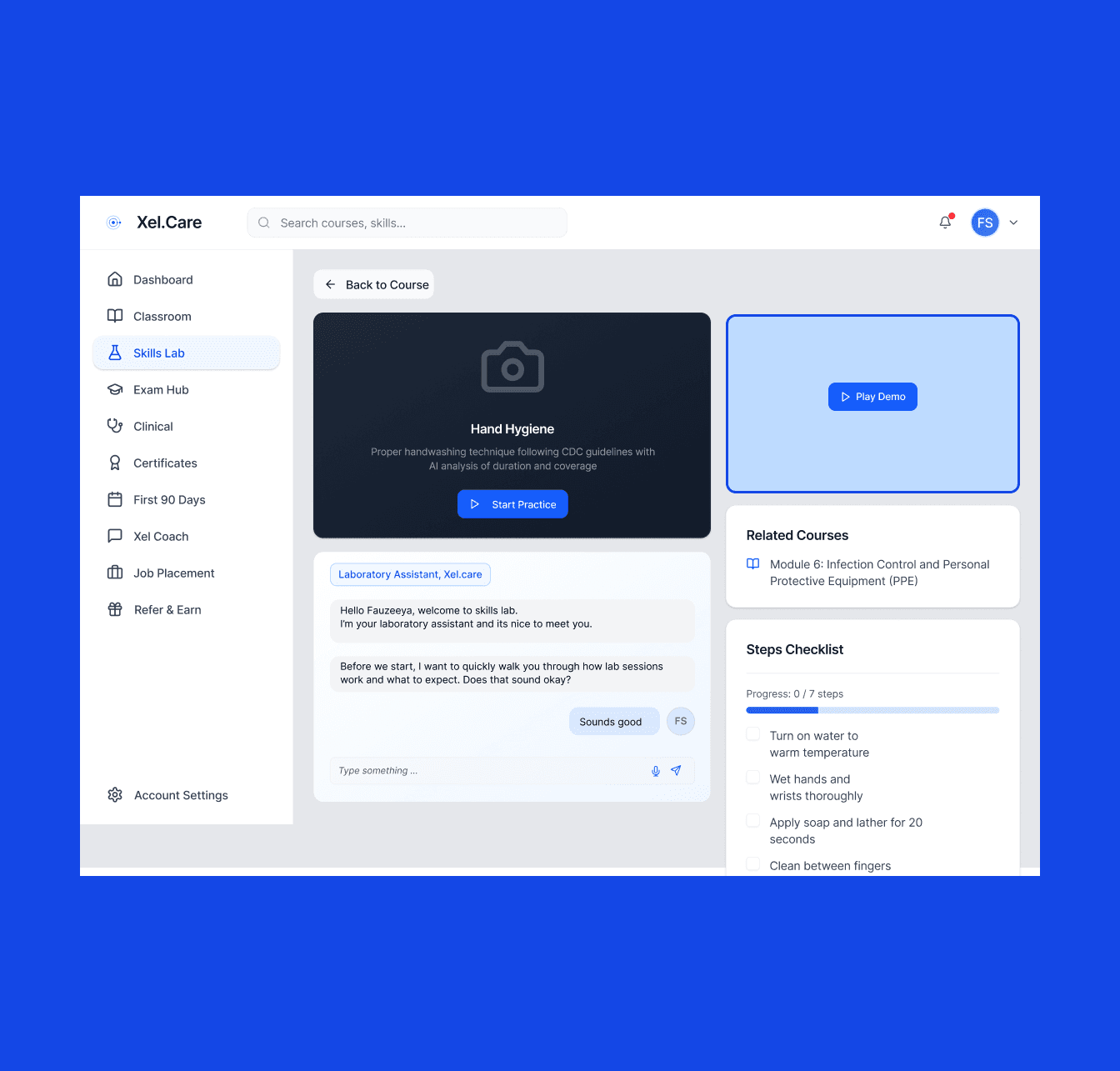
InsightDesigning this meant deciding who talks to whom and when, not just what each screen looks like. One early Course Agent taught pre-surgical hygiene, scored down to micro-skills with required retests.
Iteration: video interviews become audio
I wanted admissions interviews on video, the way a real admissions officer would run them. We could not solve it in time.
InsightWe shipped audio instead, so students could talk rather than only type. An open trade-off, with video still on the list.
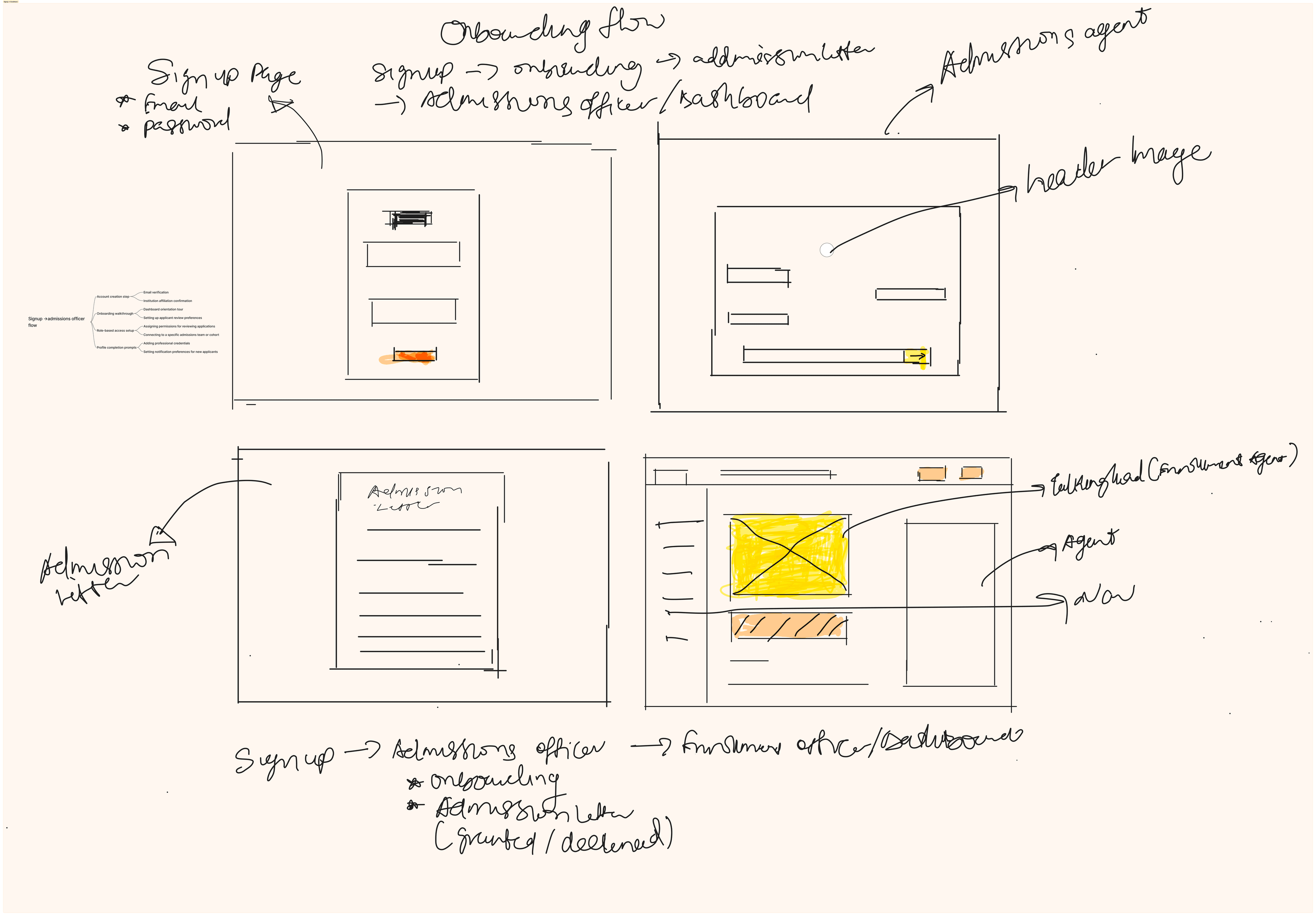
Low-fidelity exploration
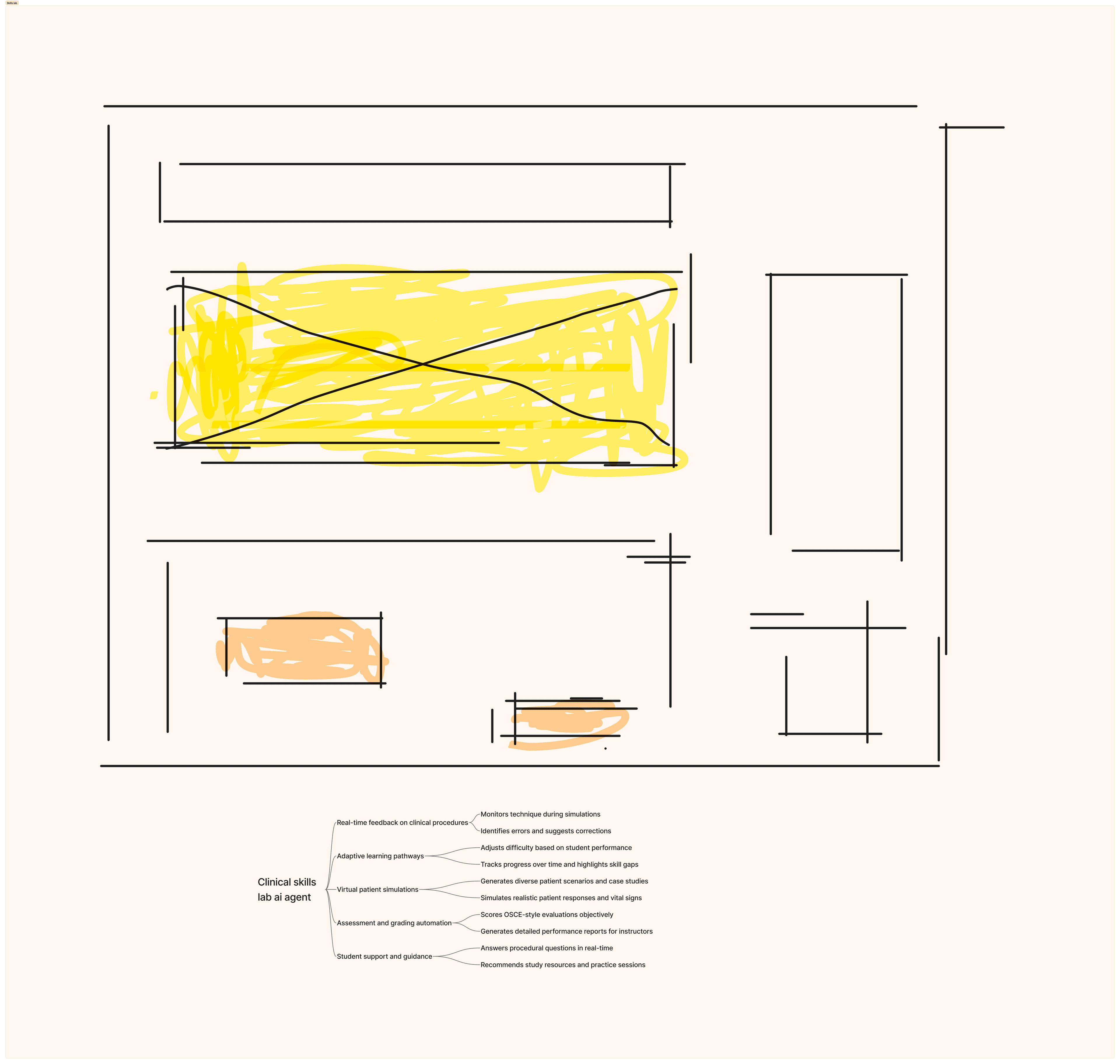
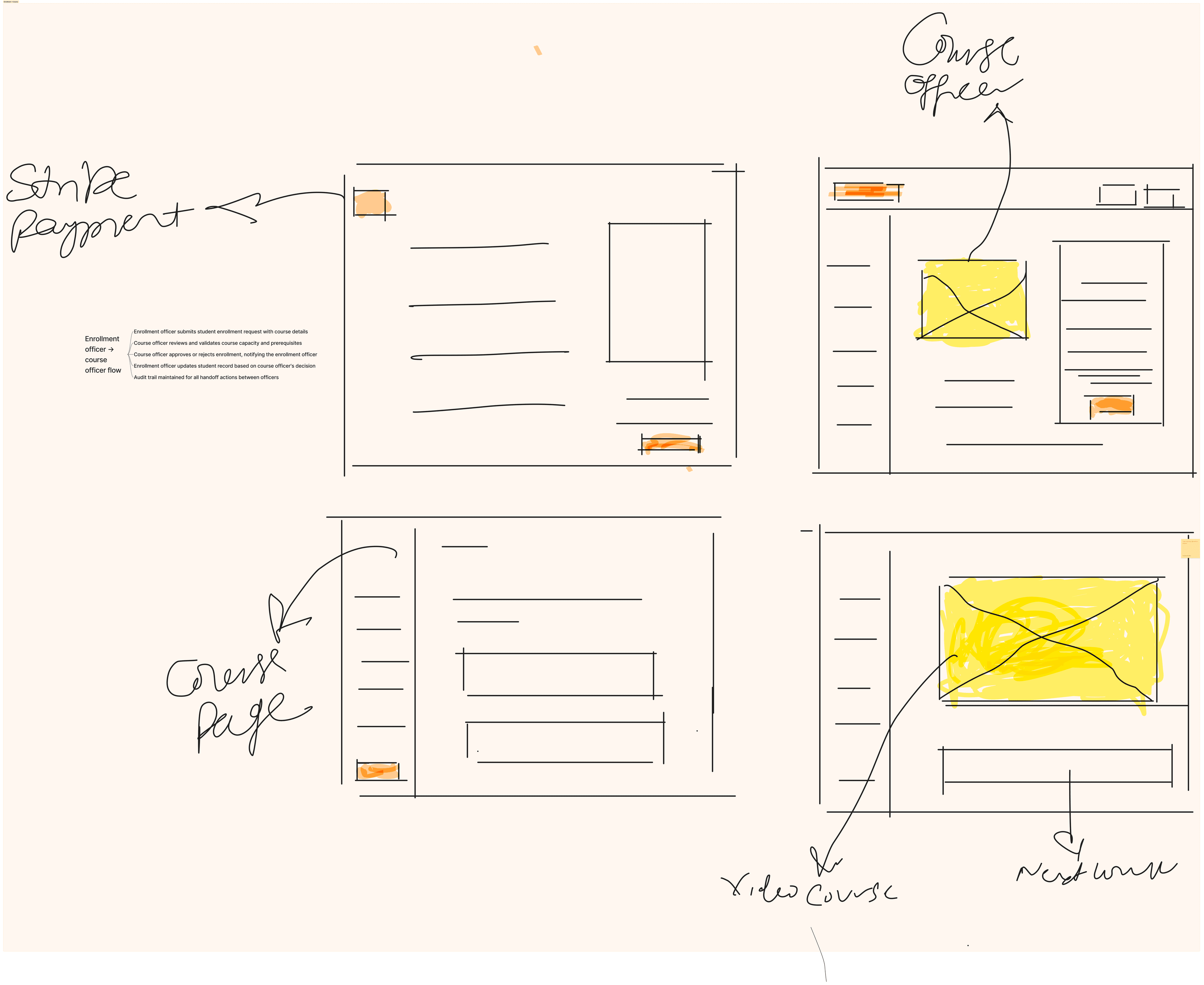
Early exploration was the system before the screens: mapping agent handoffs and student states, then wireframing where students meet each agent.
High-fidelity design
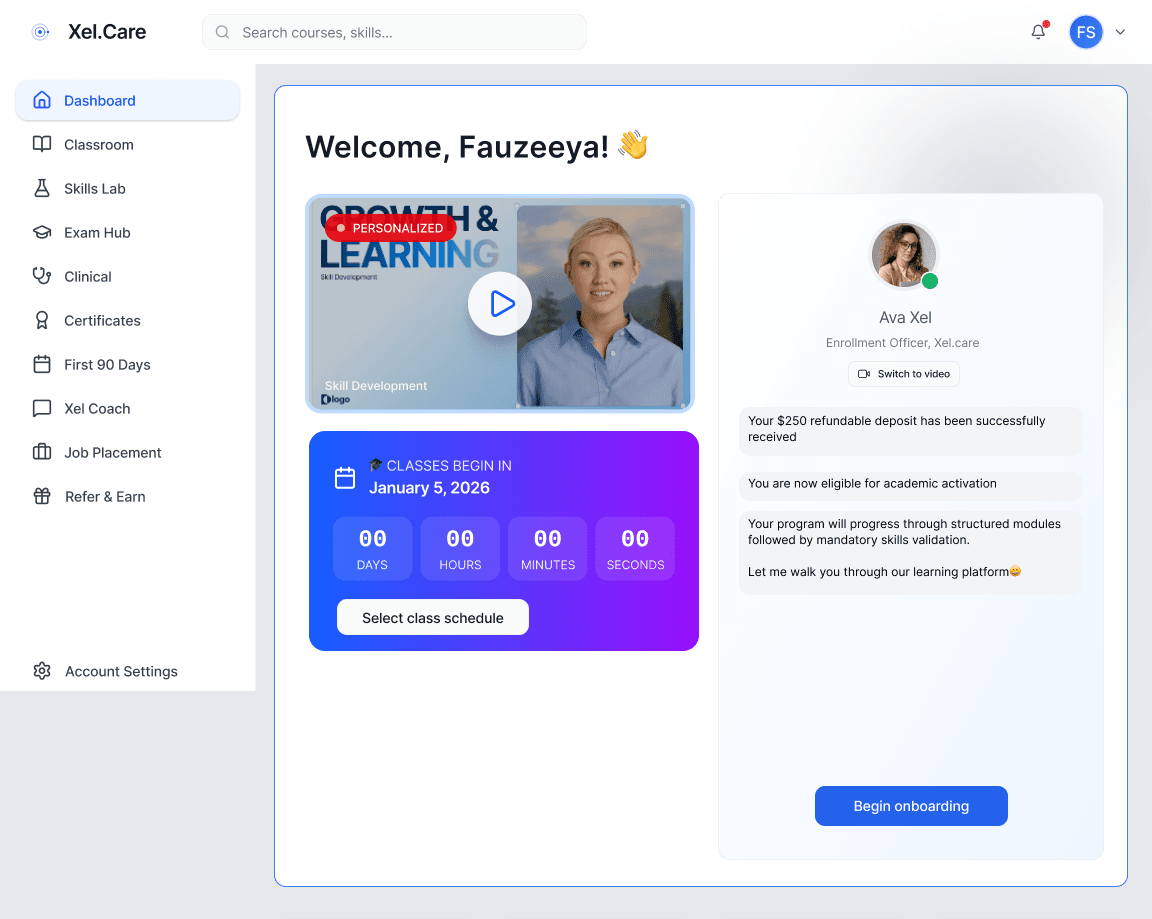
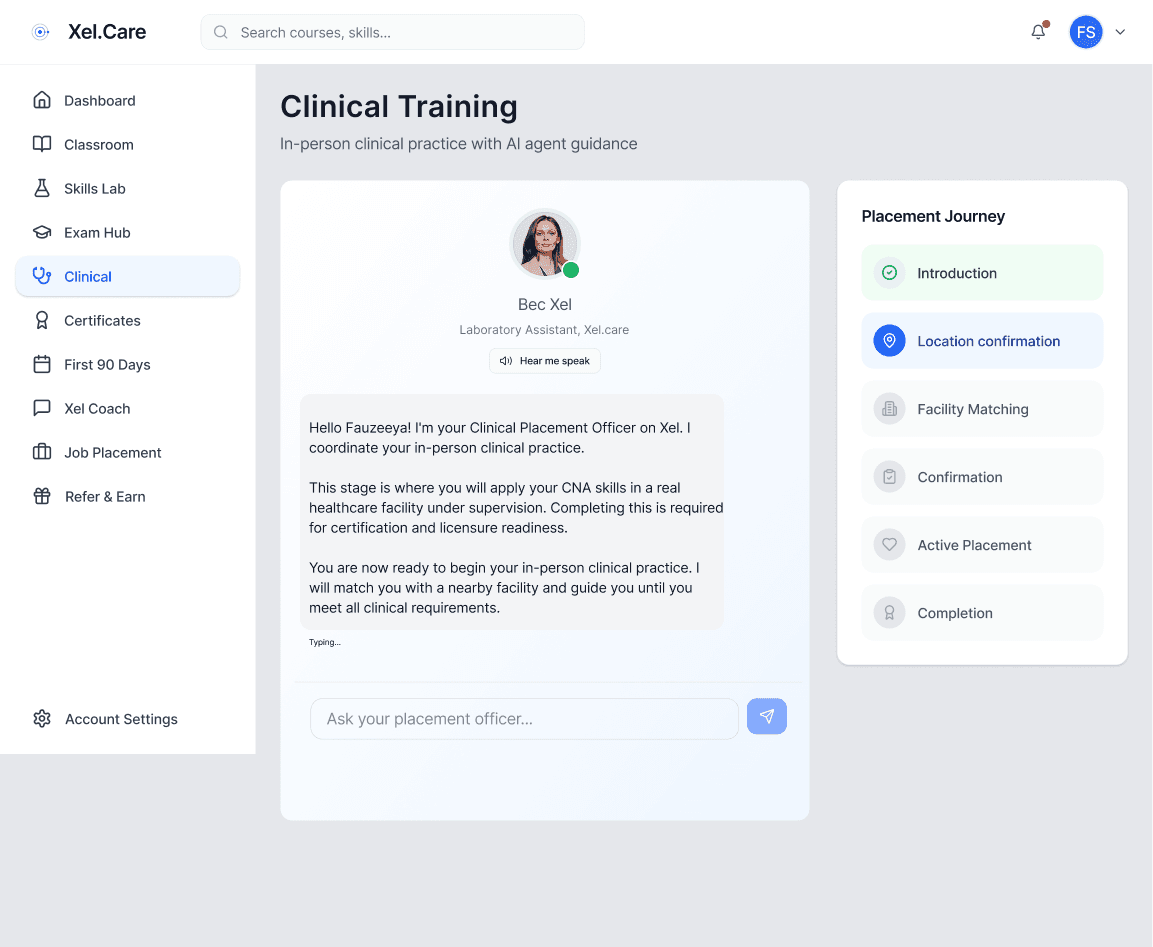
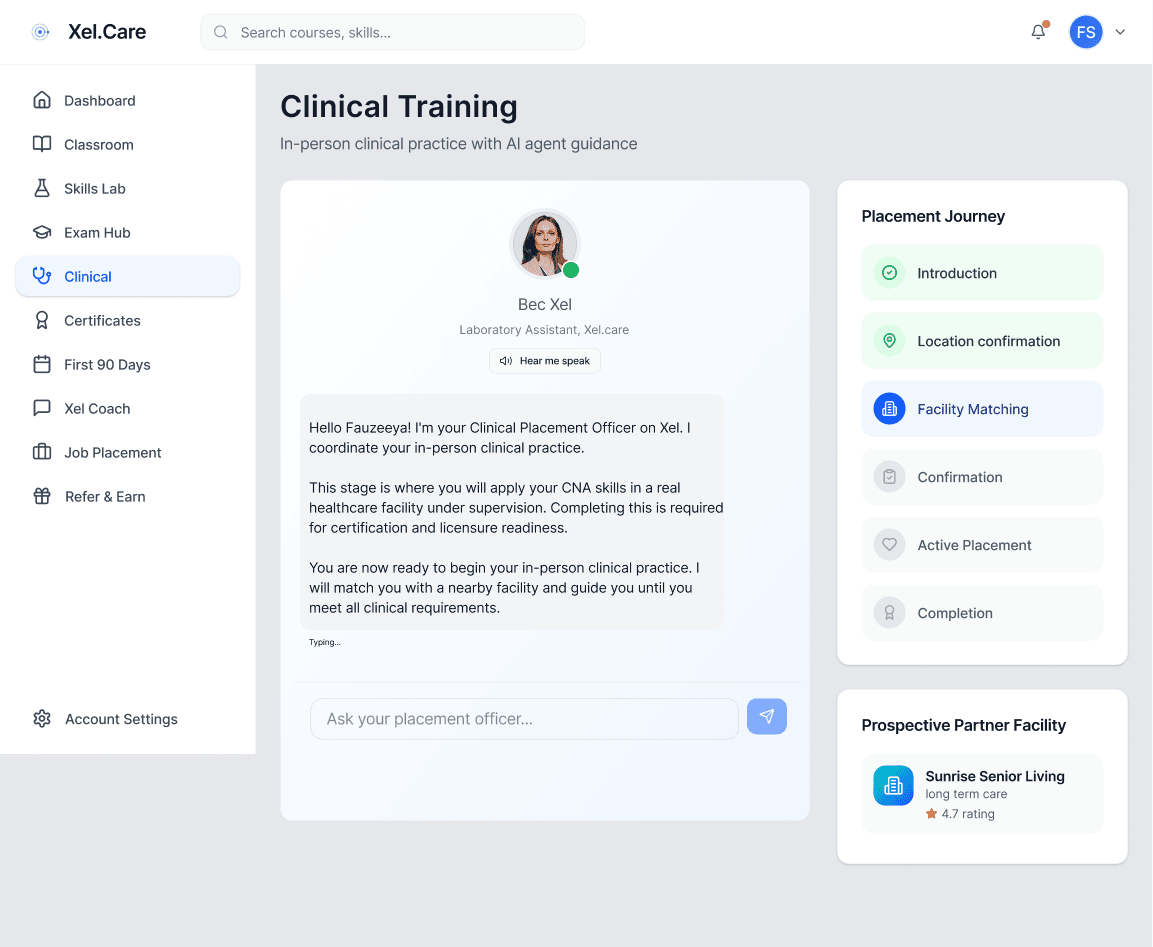
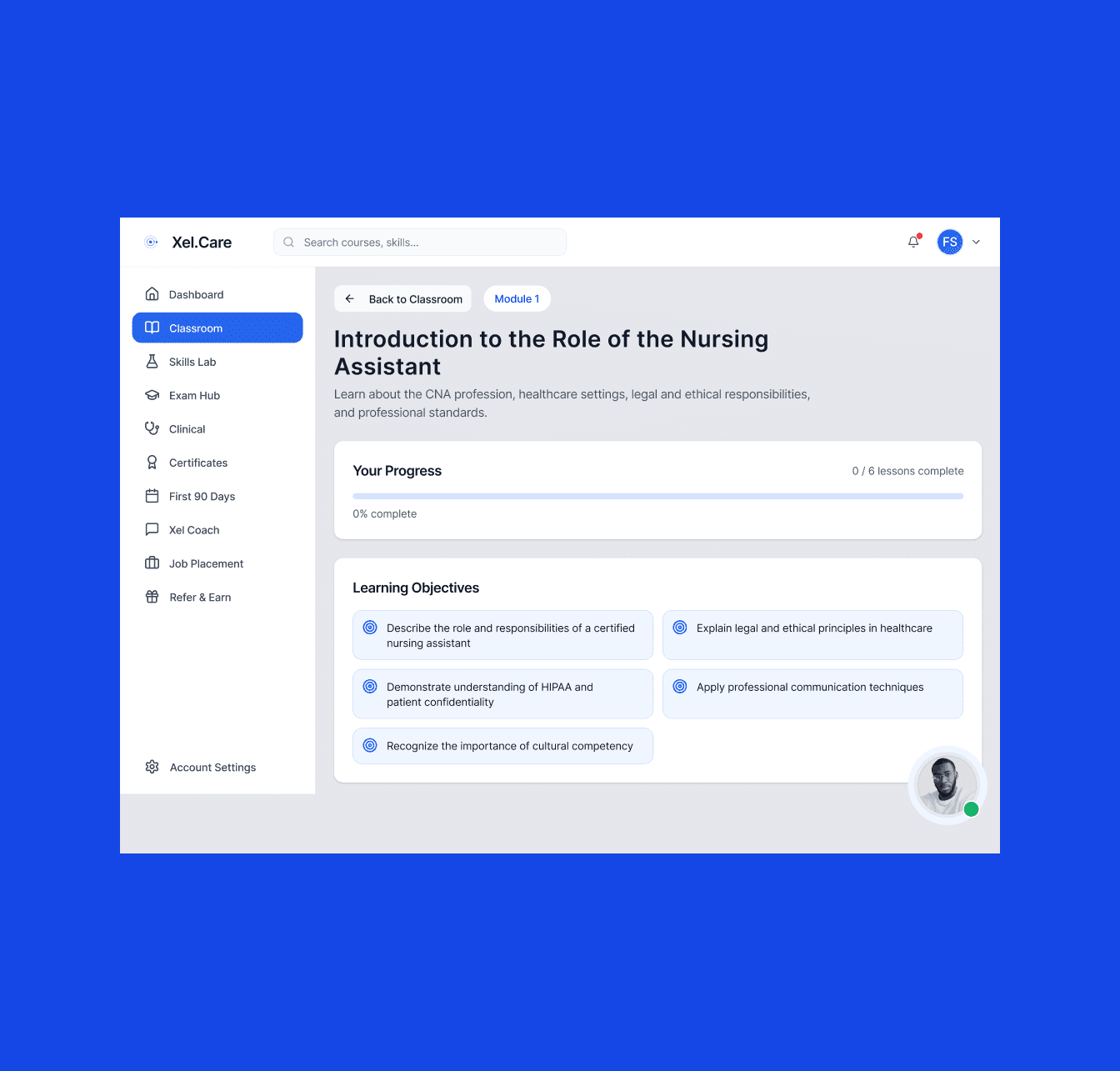
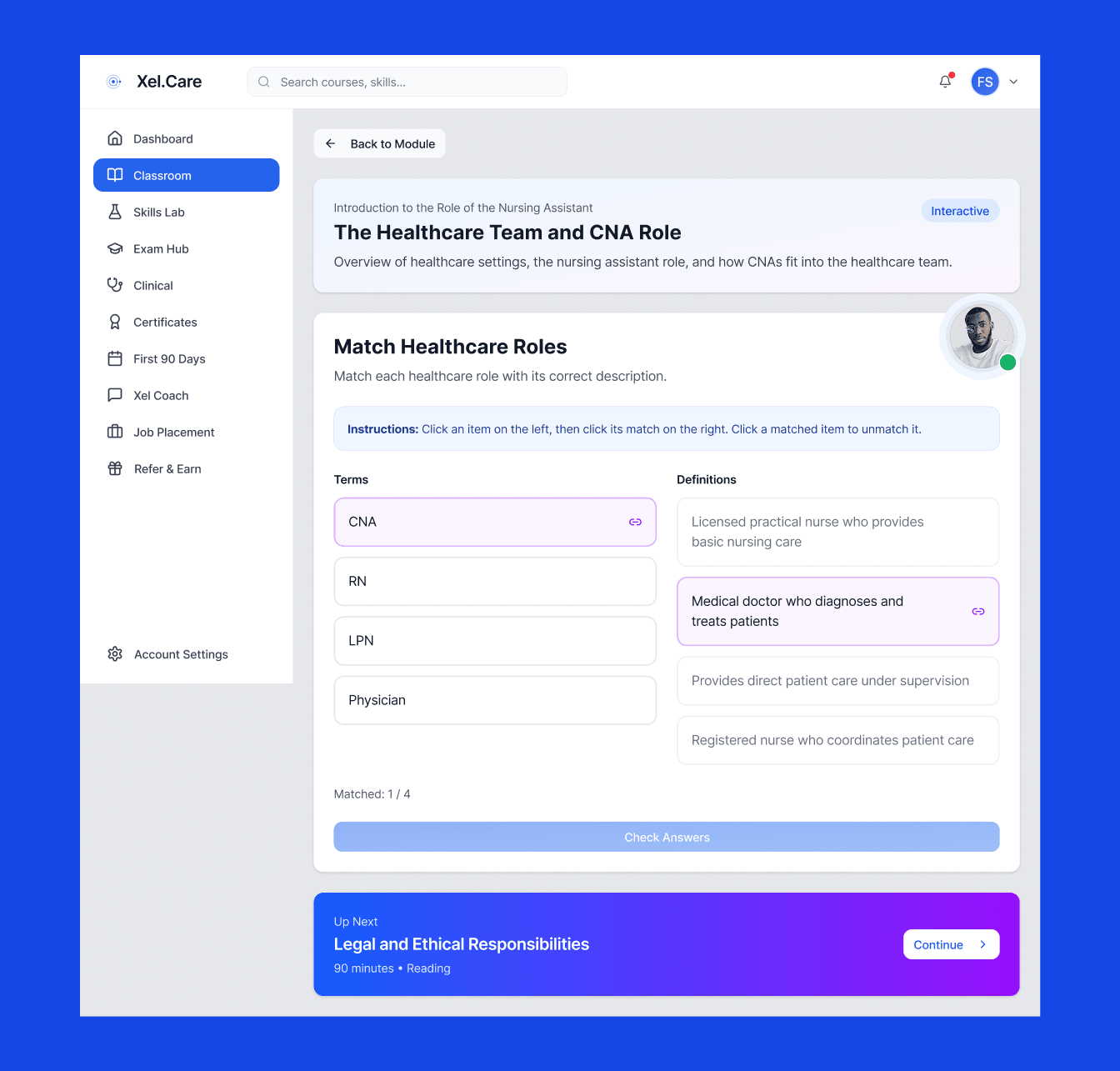
The final designs carry students from interview to coursework to grades while always making clear which agent you are talking to and what happens next.
Prototype (recording)
Usability testing
I tested the product myself throughout, alongside a second dedicated tester as each agent stage came online.
Results
- Typing a whole admissions interview felt cold, which pushed us to the audio option
- It was easy to lose track of which agent you were talking to, so each got a clear identity in every conversation
- Retests did not say what to redo, so score feedback now points at the specific skill
Measuring success
Was the project successful and why?
Paused, on purpose
Xel.care has zero customers; we paused before reaching Placements. The deciding insight came from research, not the build: most people wanted a paycheck more than care work, and a passion gap is harder to close than a cost gap. The stakeholder paused Xel.care to focus on AfroHealth. For me, this is the project where I stopped designing products like they belonged to someone else.
Metrics and KPIs
- Flow built end to end through the Course Agent stage, including hands-on skills training
- Zero customers at pause, stopped at the Placements stage
- Research redirected the model: paycheck motivation outweighed passion for care work
Future vision / next steps
- Apply the model to fields where passion already exists but affordable education does not
- Xel.tech is one direction under consideration
- Agent video calls remain on the list
Chapter 04
Final designs
Previous case study
← PrymeKidsNext case study
Konvas AI →