- AI
- E-commerce SaaS
Designing Konvas AI from a few pitch screens to a Techstars-backed platform
An AI marketing platform for Shopify store owners, built from a handful of pitch screens into a Techstars-backed product. Trust was the core design problem.
- My role
- Product Designer (with de facto PM duties alongside the lead PM)
- Date
- August 2024 - August 2025
- Platform
- Web Application (SaaS)
- Tools
- Figma, Microsoft Office
- Team
- 8 people
Chapter 01
Introduction
The product
Small merchants cannot personalize at scale; broad segments were the ceiling. Konvas AI analyzes a customer's behavior, purchases, and preferences, then generates tailored messages and product recommendations automatically.
About the project
When I joined, the product was a few pitch screens. I built the design system and the product from the ground up: campaign builder, personalization flows, and analytics. Not long after, we got into Techstars.
Chapter 02
Problem space
Problems to solve
Personalization at scale was impossible for small merchants
Broad segments were possible. Writing to each person based on what they bought and browsed was not, without a big team.
Store owners did not trust AI-generated content
AI in 2024 showed its seams. Owners hesitated: was this personalized, or just personalized-sounding?
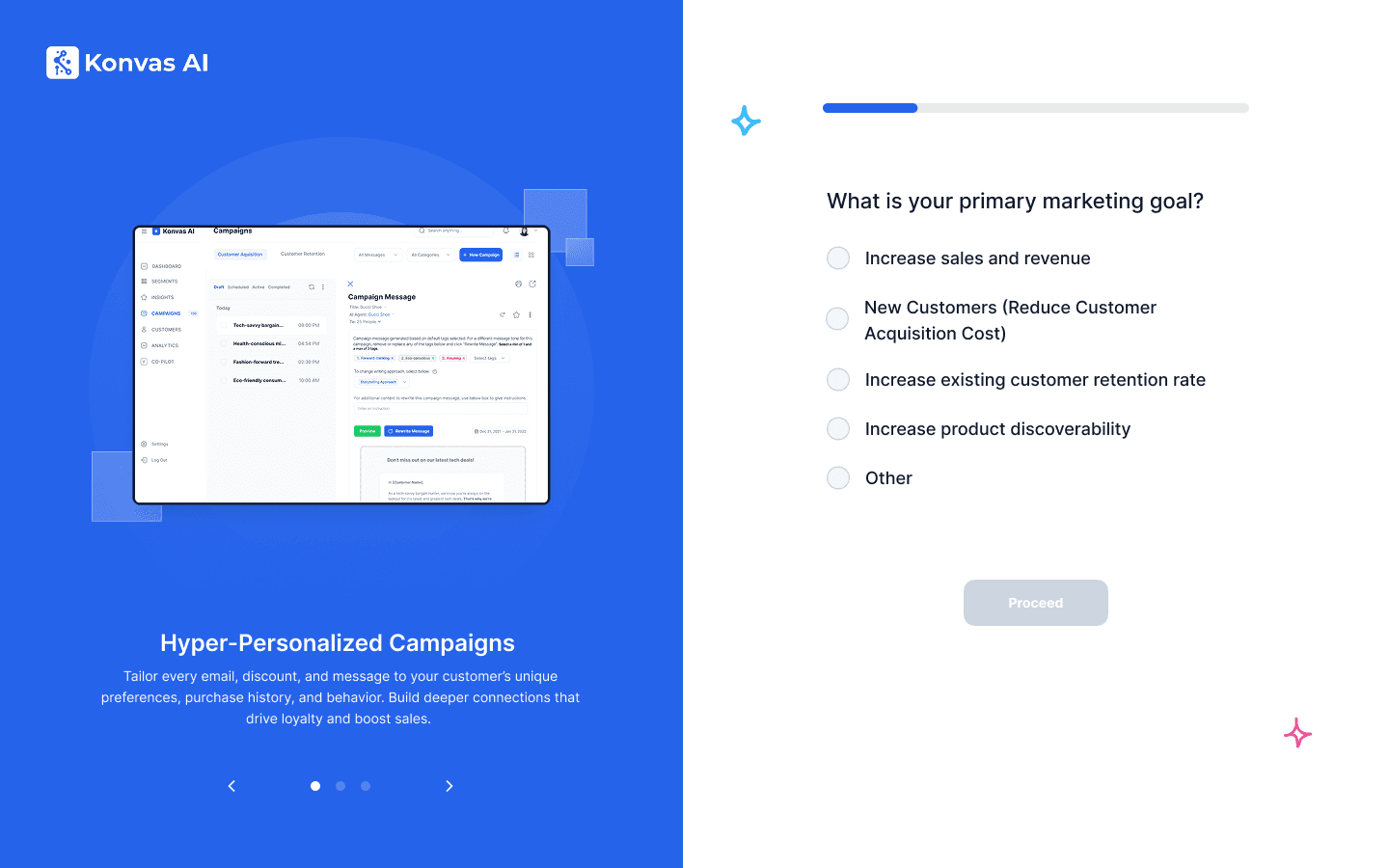
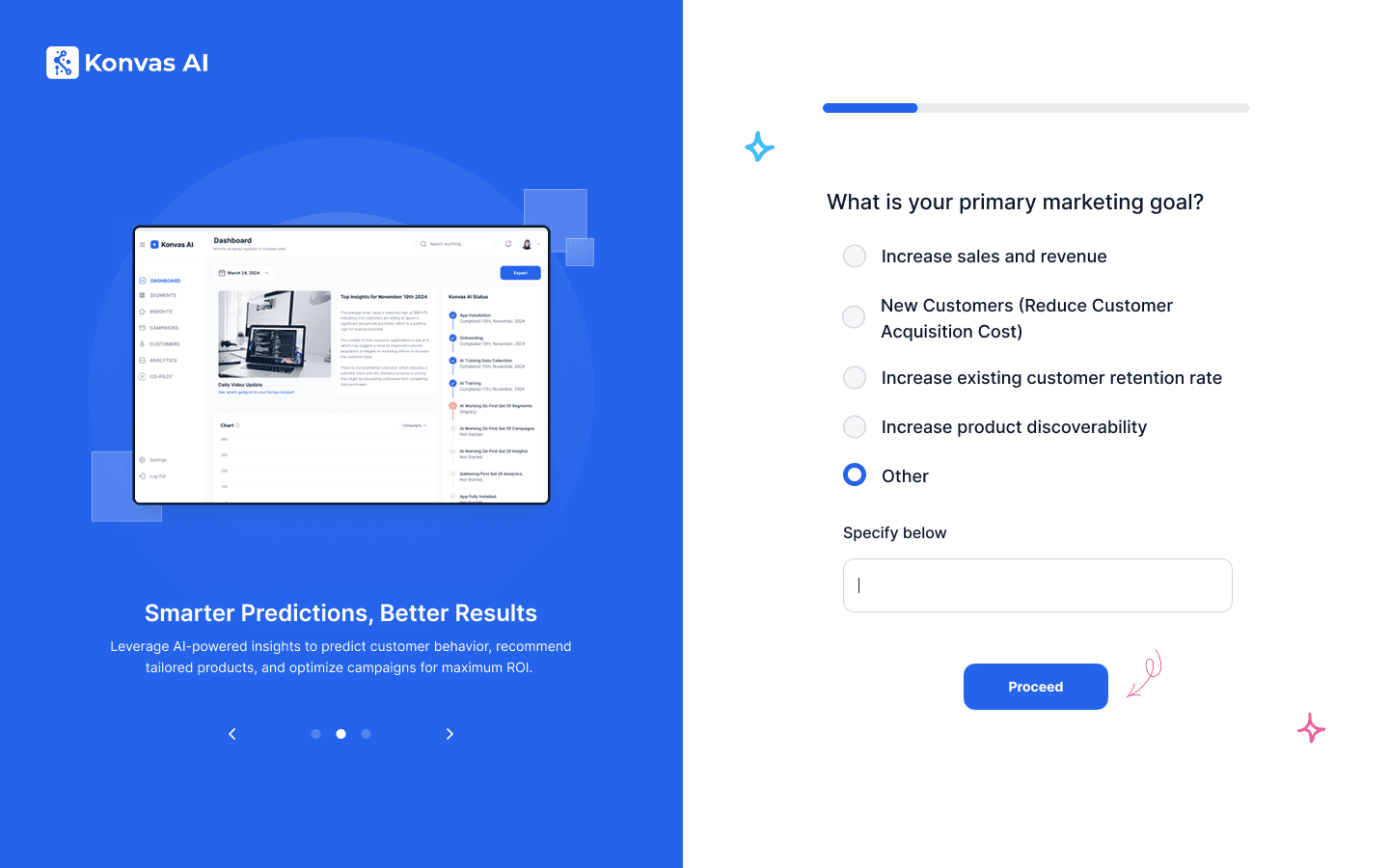
Onboarding was too long, and so was the path to a first message
We front-loaded setup, tone, preferences, even the password, before users saw any value.
Why solve these problems?
A working personalization engine means nothing if the person holding the send button does not believe in it. The design problem is not whether the output looks good; it is whether they feel comfortable saying yes.
Goals
Company objective
Prove hyper-personalized marketing could work as a self-serve product for small merchants
Project goals
- Make AI-generated campaigns feel trustworthy enough to send
- Give store owners real control over tone, model, and templates
- Shorten the path from sign-up to first message
- Build the design system and product from the ground up
Our users
Shopify store owners
Small merchants without marketing teams. They wanted personalization at scale, but they were skeptical of AI speaking to their customers in their brand's voice. Control mattered as much as capability.
Jobs To Be Done
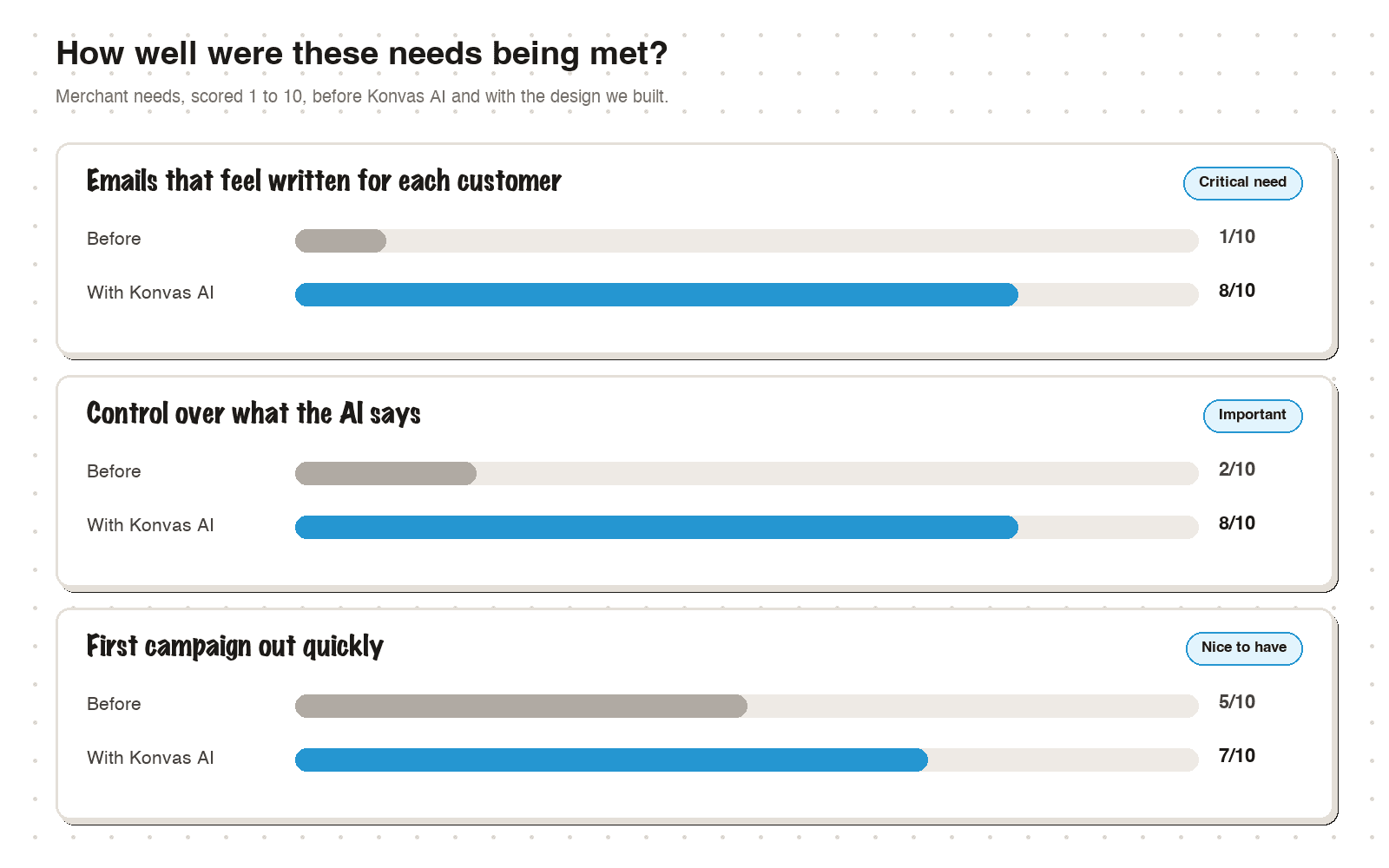
Send emails that feel written for each customer
Tailored messages and product recommendations from real behavior, not broad buckets.
Stay in control of what the AI says
Choose the tone, the model, and the template before anything goes out.
Get my first campaign out quickly
See value before being asked for lengthy setup.
Chapter 03
Solution space
Exploratory research
User interviews
Who we interviewed
We ran many interviews and calls with Shopify store owners throughout the project, plus usability tests with two participants
Our hypothesis
- Store owners would trust AI content if they had real control over tone, model, and templates
- Shortening the path to a first sent message would improve activation
Learnings
- Skepticism was the core obstacle, more than any missing feature
- Saying yes to every feature request kept the roadmap reactive, a pattern I would handle differently now
Solutions
ProblemPersonalization at scale was impossible
SolutionAn engine that analyzes behavior, purchase history, and preferences, then generates tailored messages and recommendations automatically.
ProblemStore owners did not trust AI content
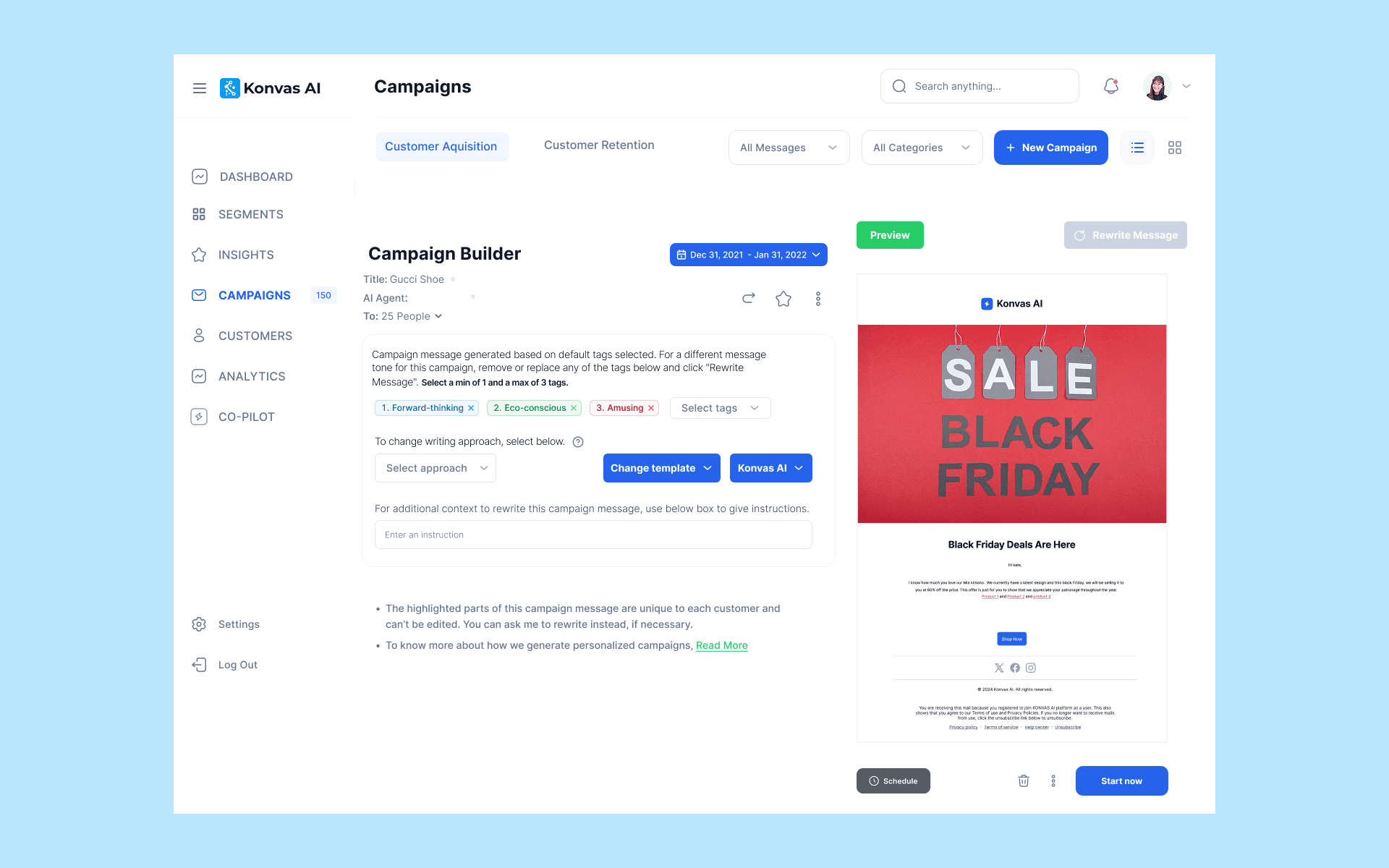
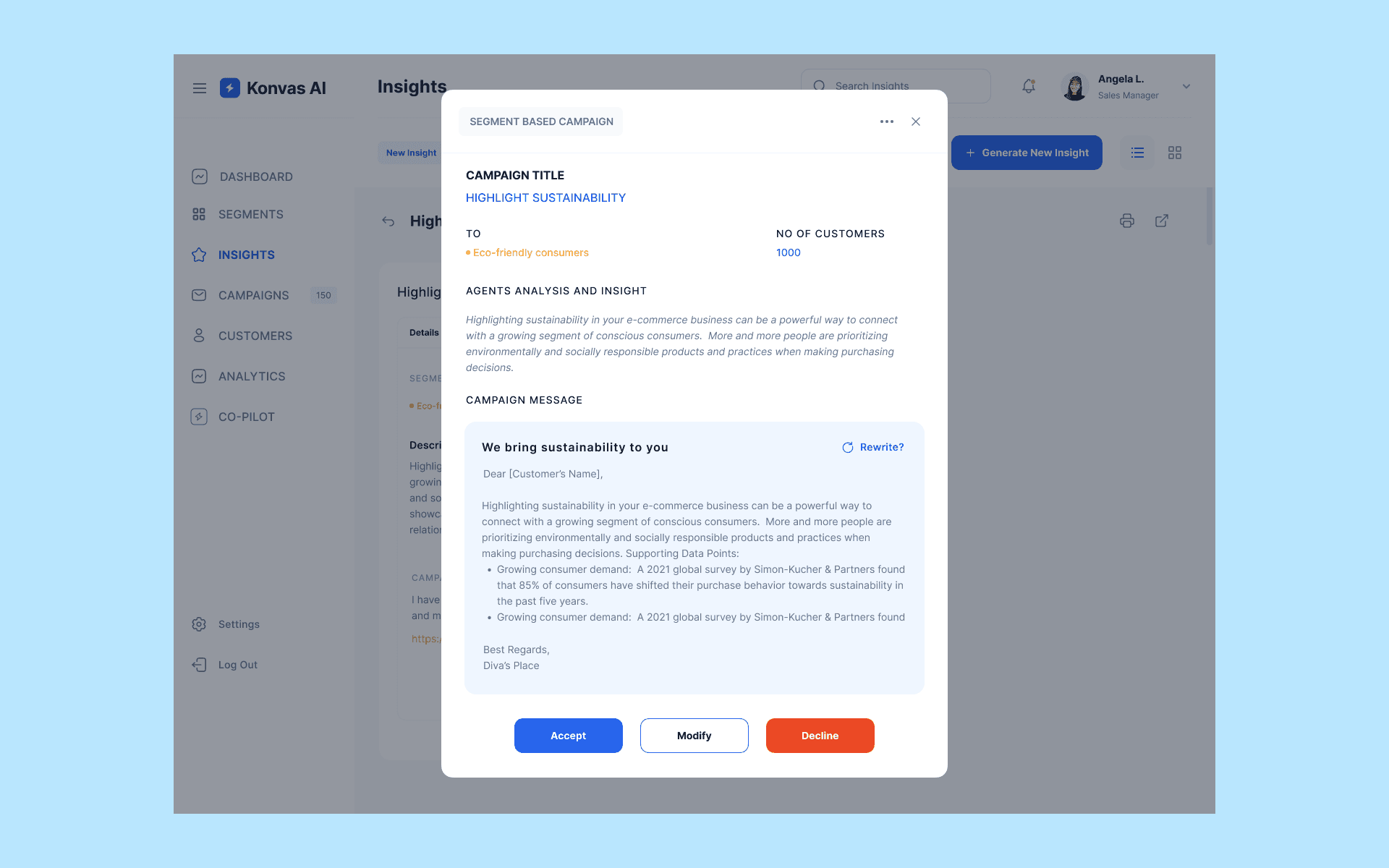
SolutionTrust controls everywhere: owner-picked tones, dedicated agents for tone, content, and recommendations, and a choice of model and template.
ProblemOnboarding and time-to-first-message were too long
SolutionWe restructured onboarding around the usability findings, cutting the path from sign-up to first message.
User flow
Iteration 1: The Klaviyo detour
We tried integrating with Klaviyo: their templates, our hyper-personalized content underneath. I designed the entire flow.
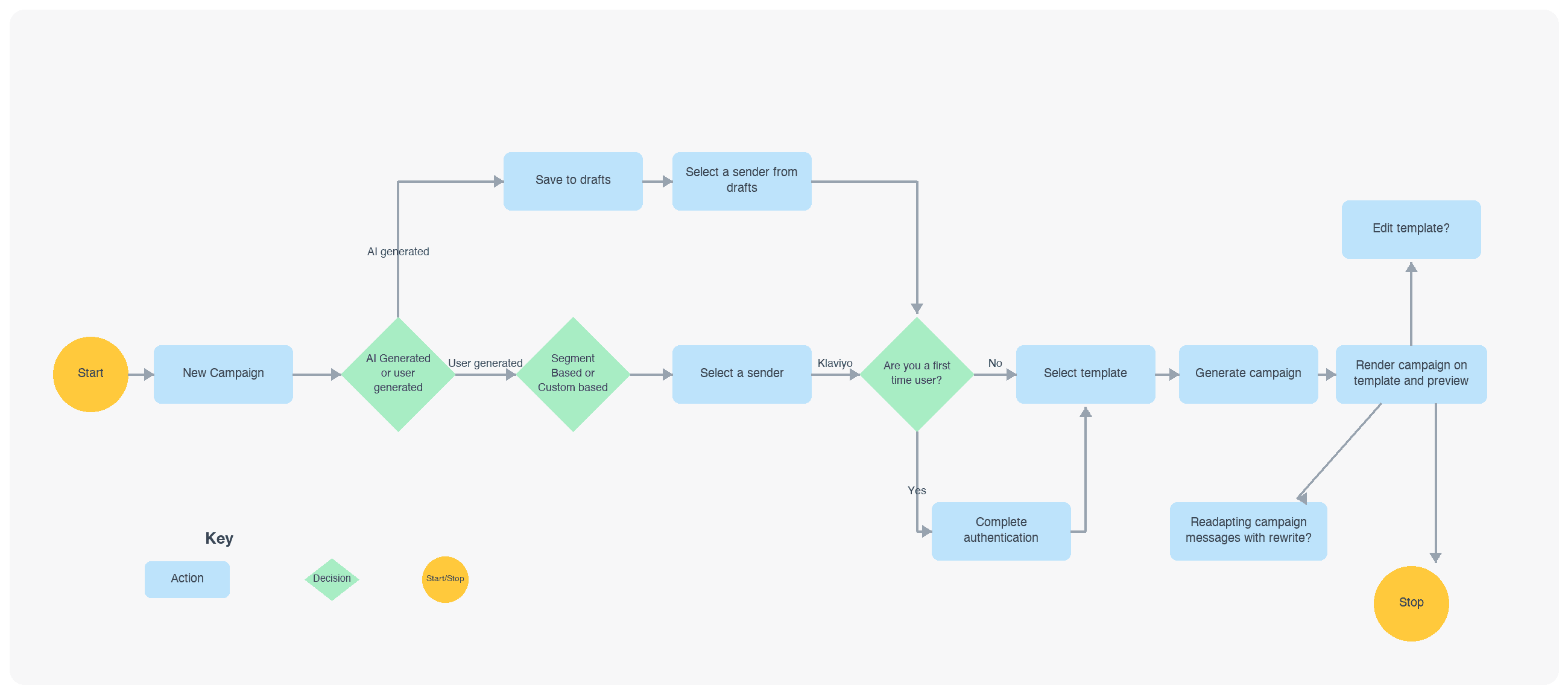
InsightKlaviyo was not built for hyper-personalized messaging at the time; the two systems never fit. We shelved it.
Iteration 2: Building our own templates
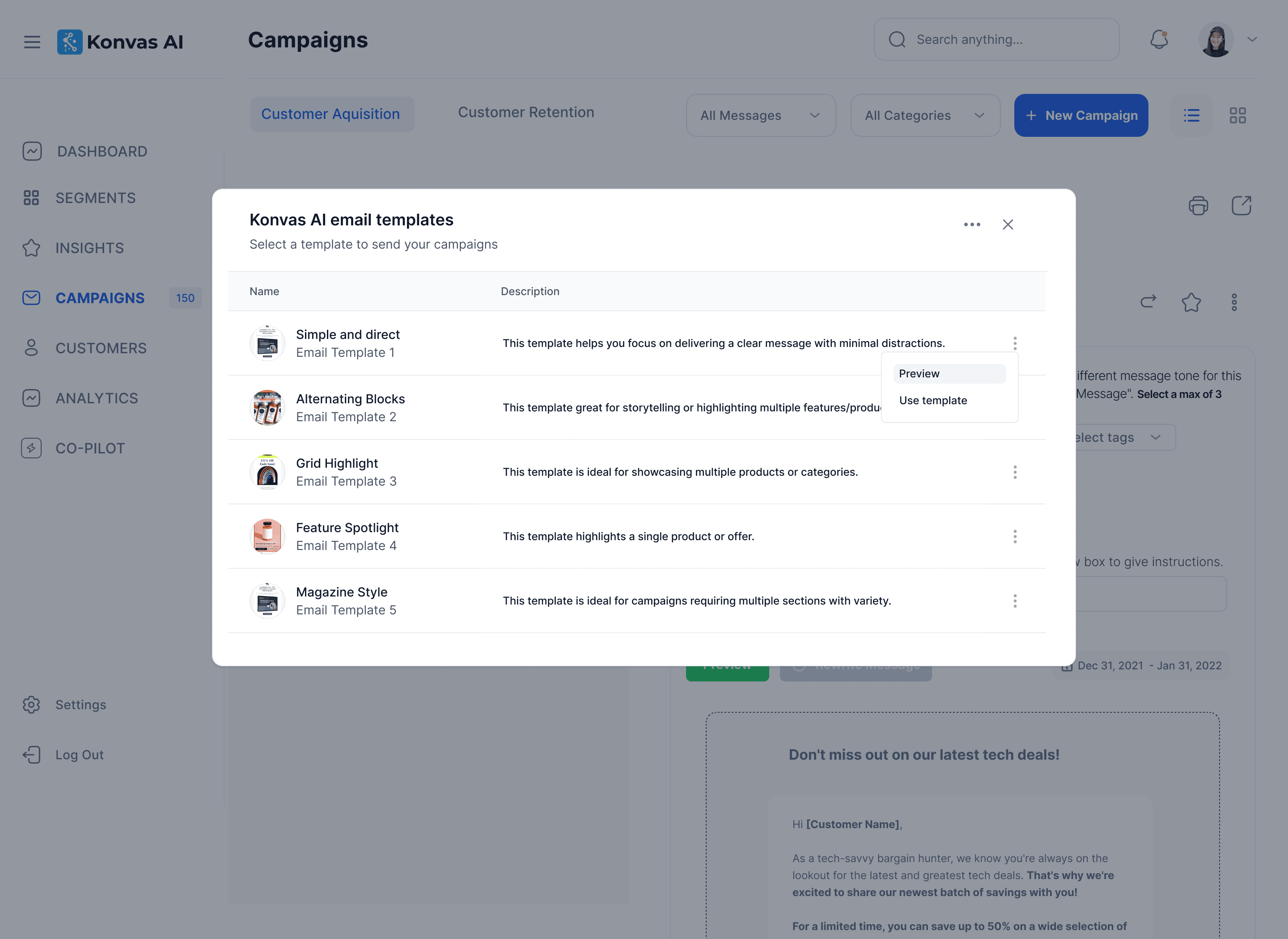
We built our own template system instead, designed from the start for hyper-personalized content.
InsightIt ended up working better than the integration would have, and gave store owners one more point of control over what the AI produced.
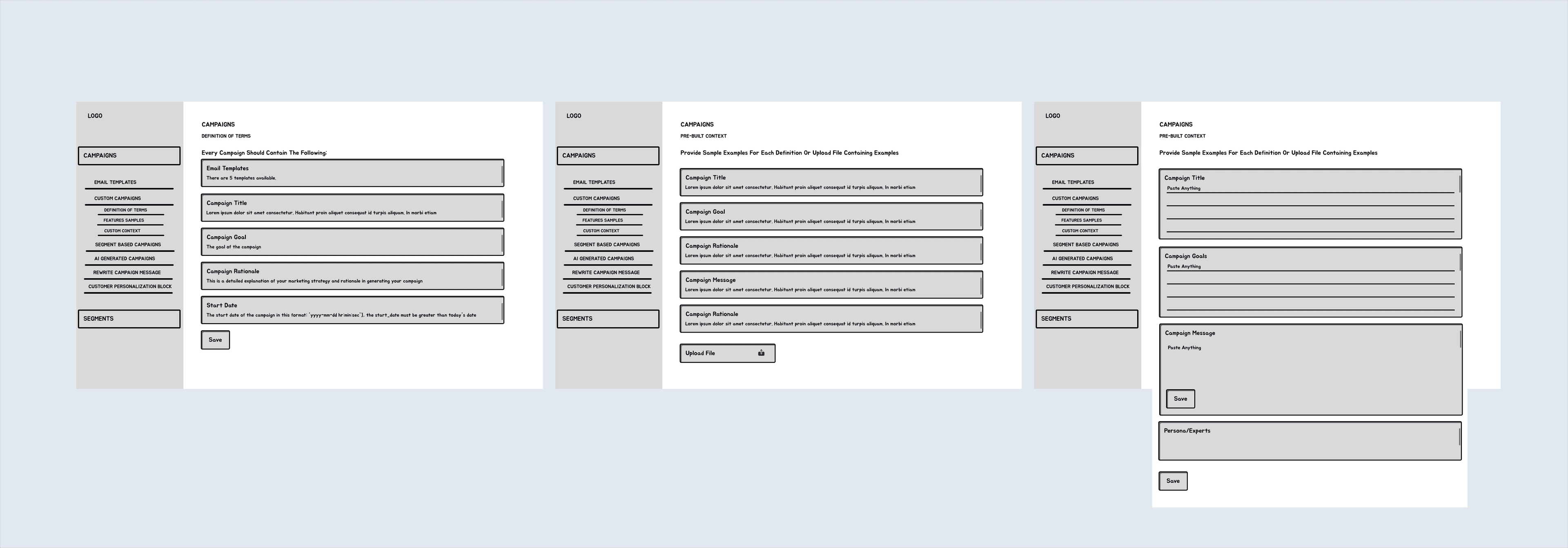
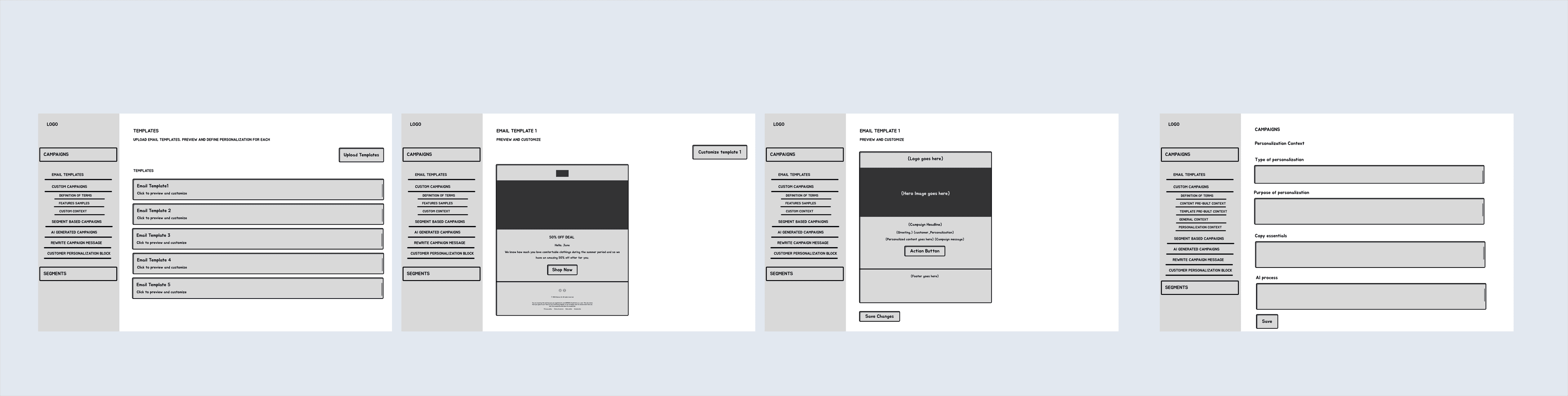
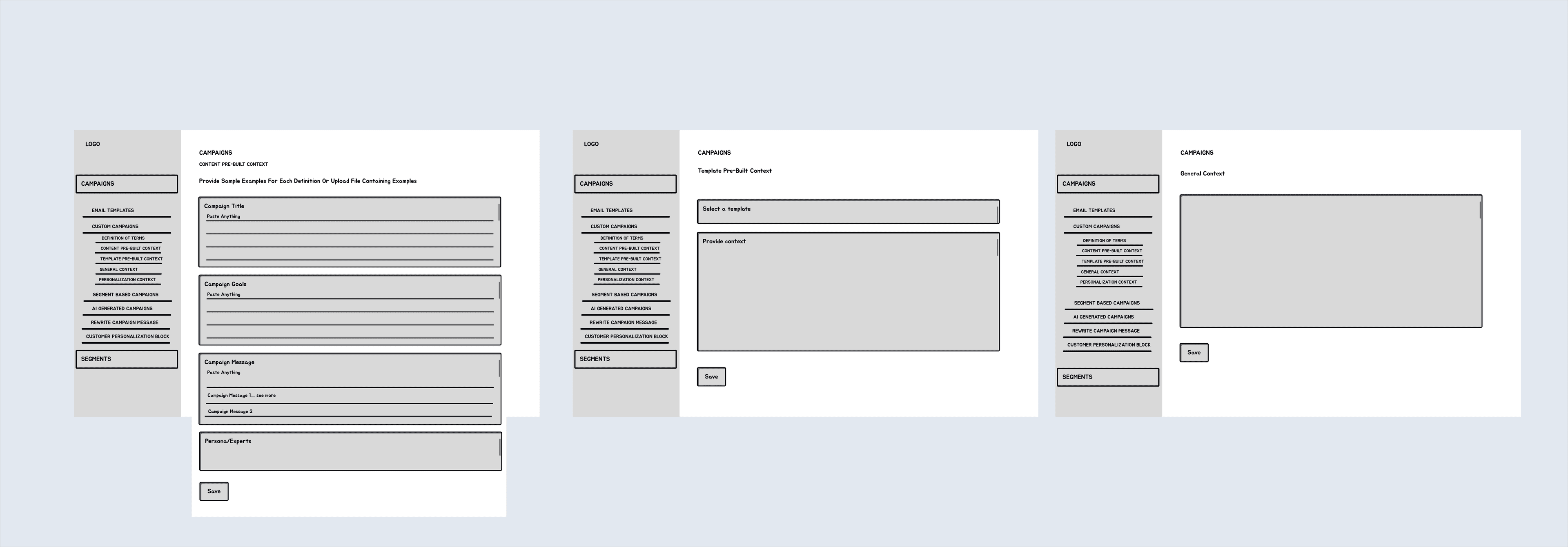
Low-fidelity exploration
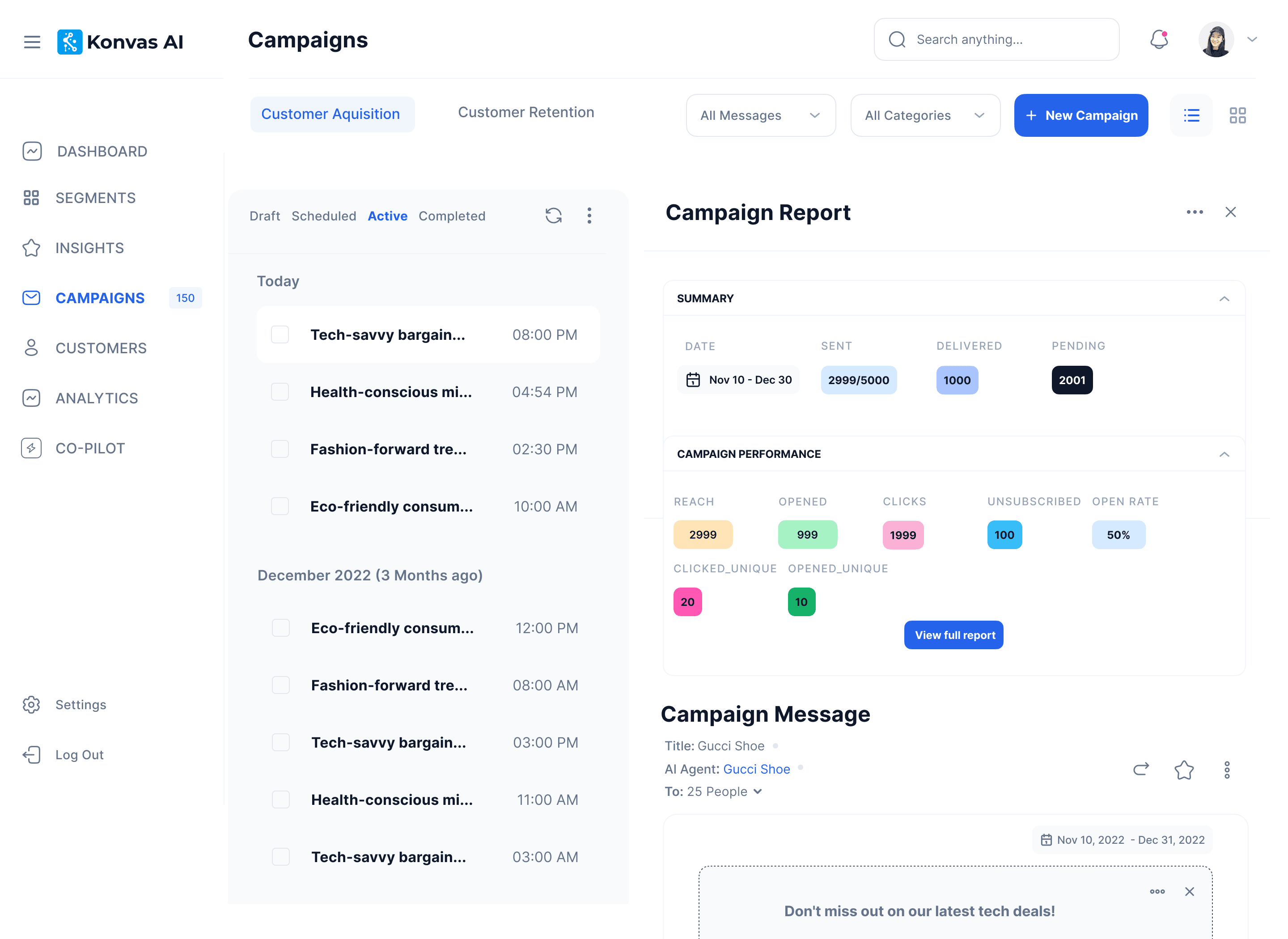
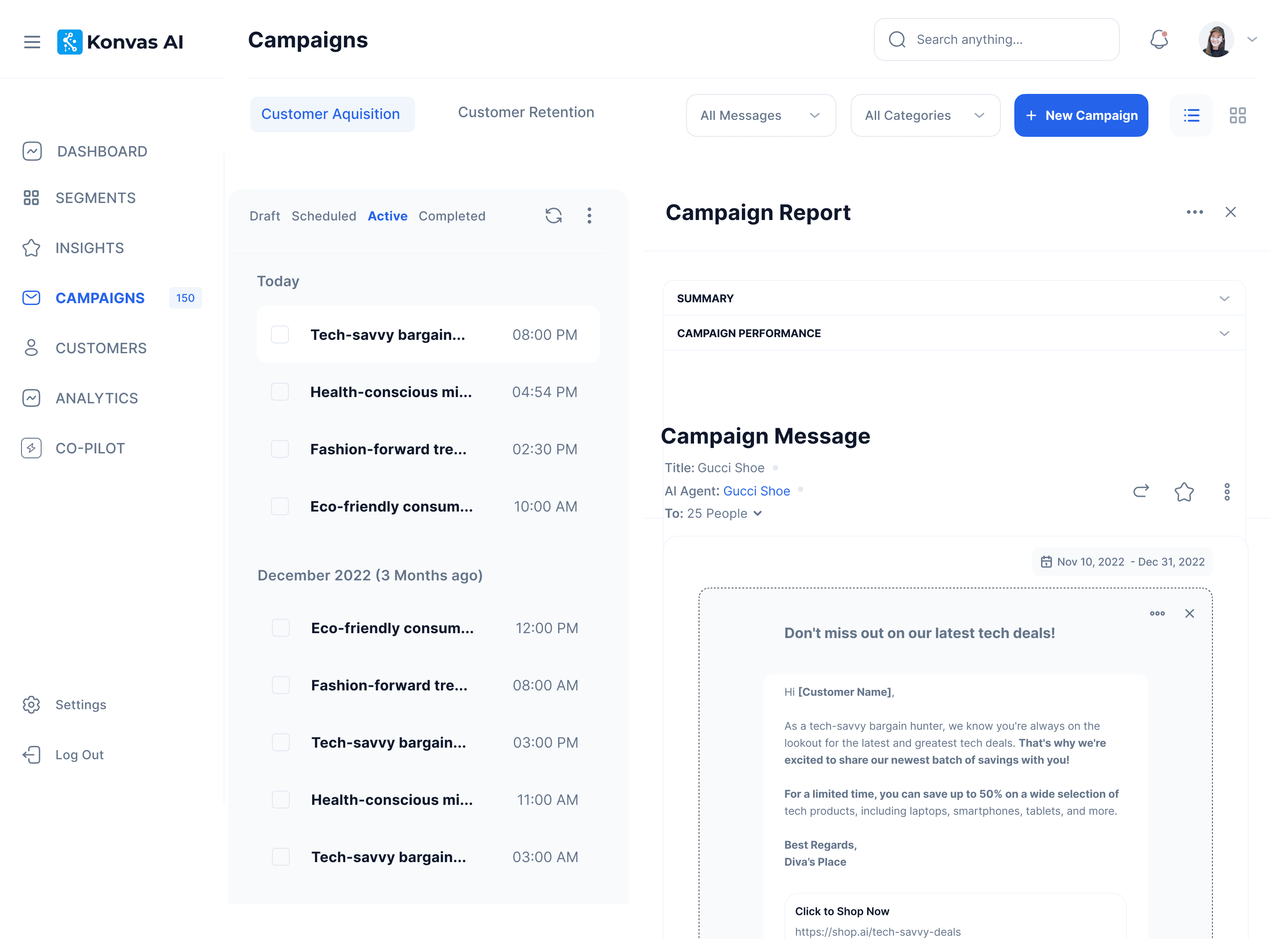
The starting point was pitch screens. I explored the campaign builder, personalization flows, and analytics before committing to polish.
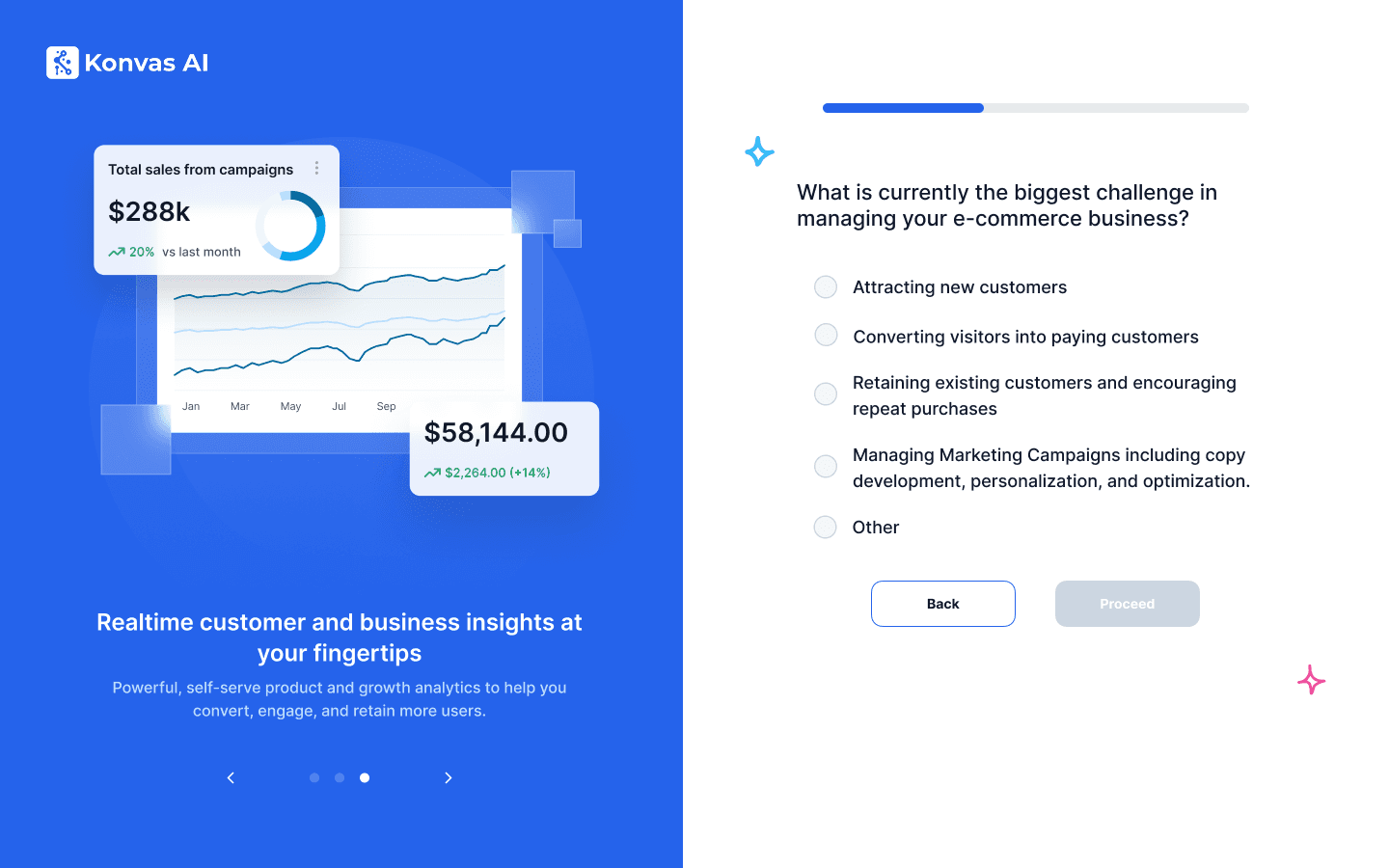
High-fidelity design
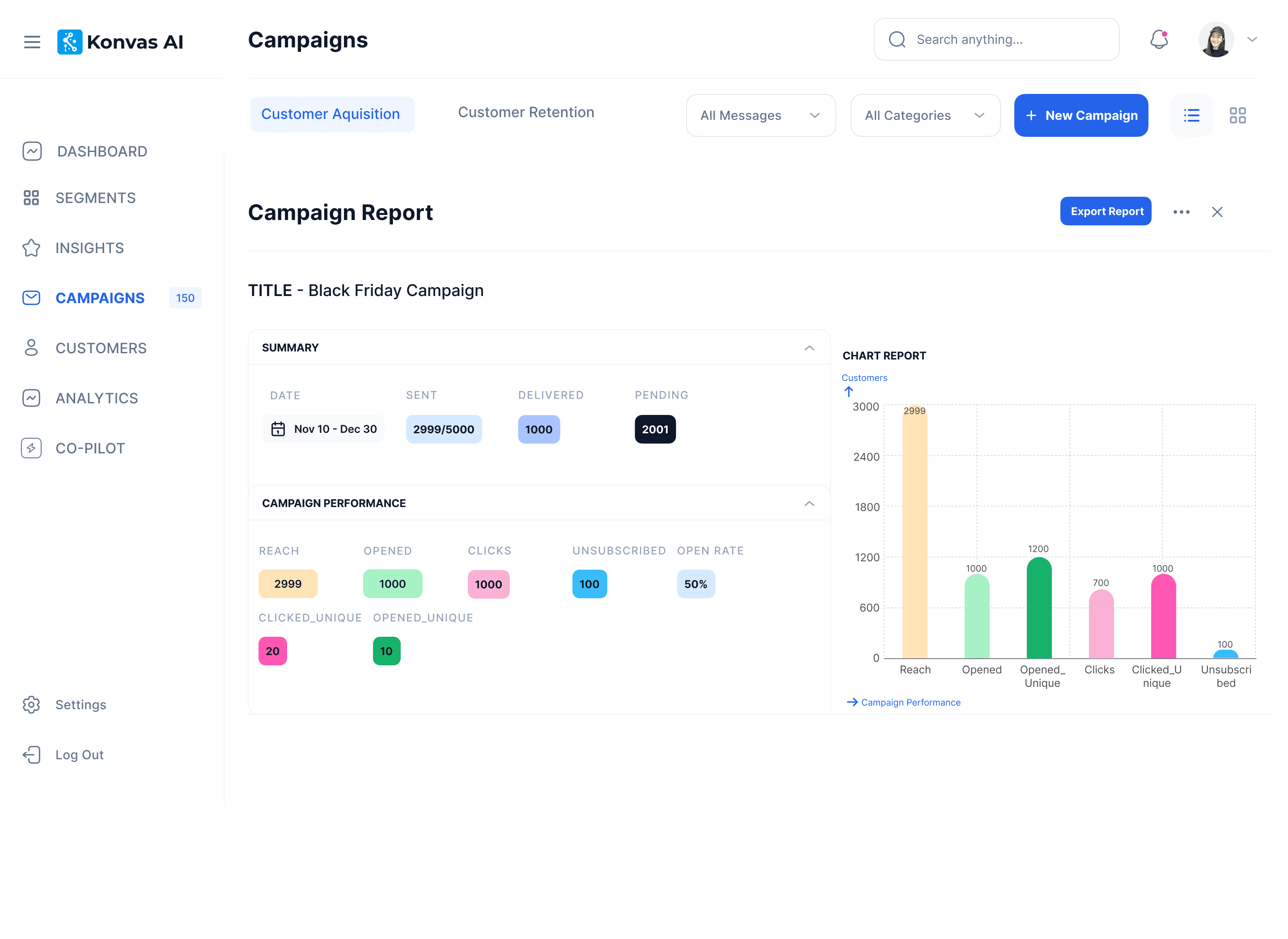
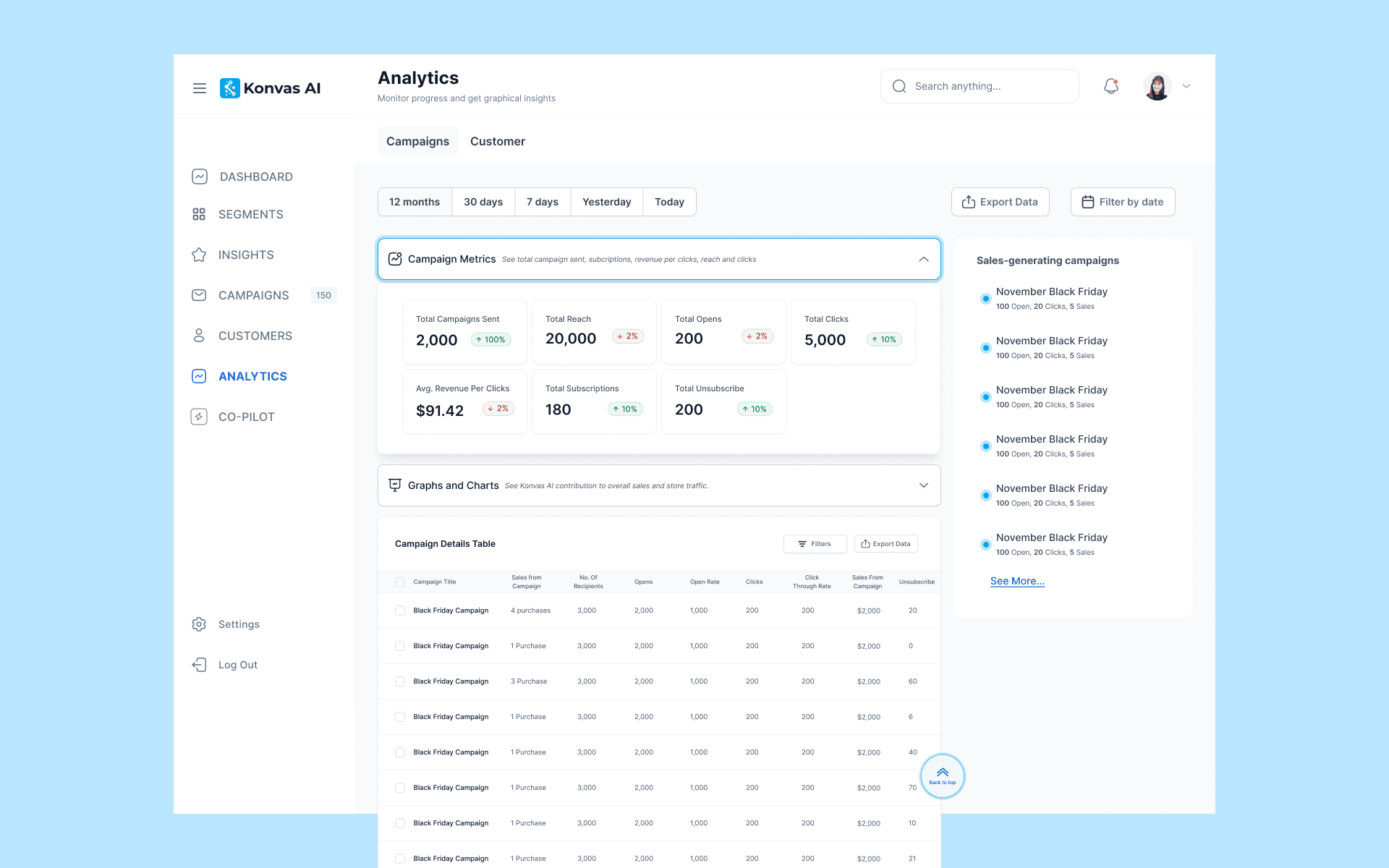
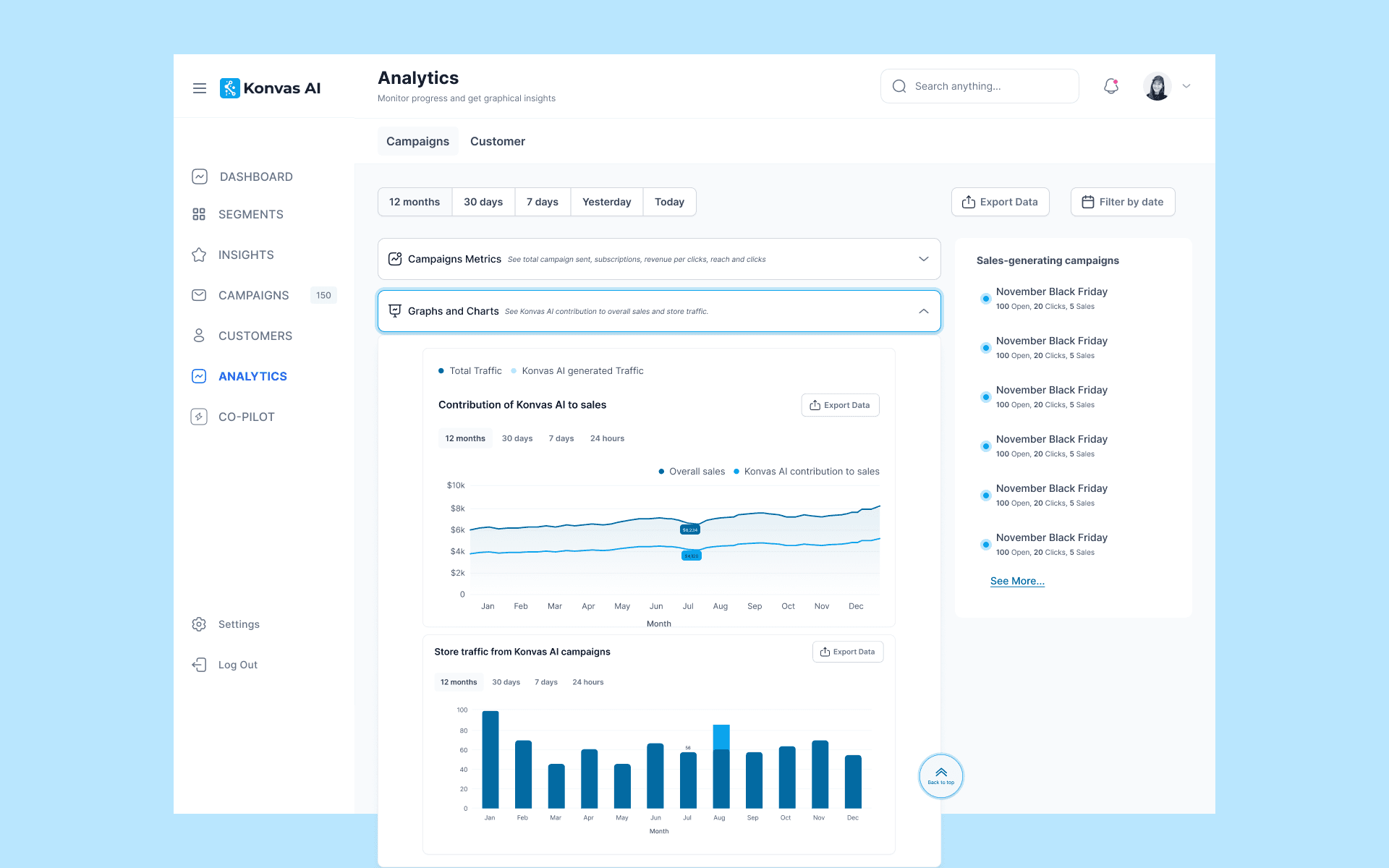
The final product: campaign builder, personalization flows, and analytics, with trust controls woven through.
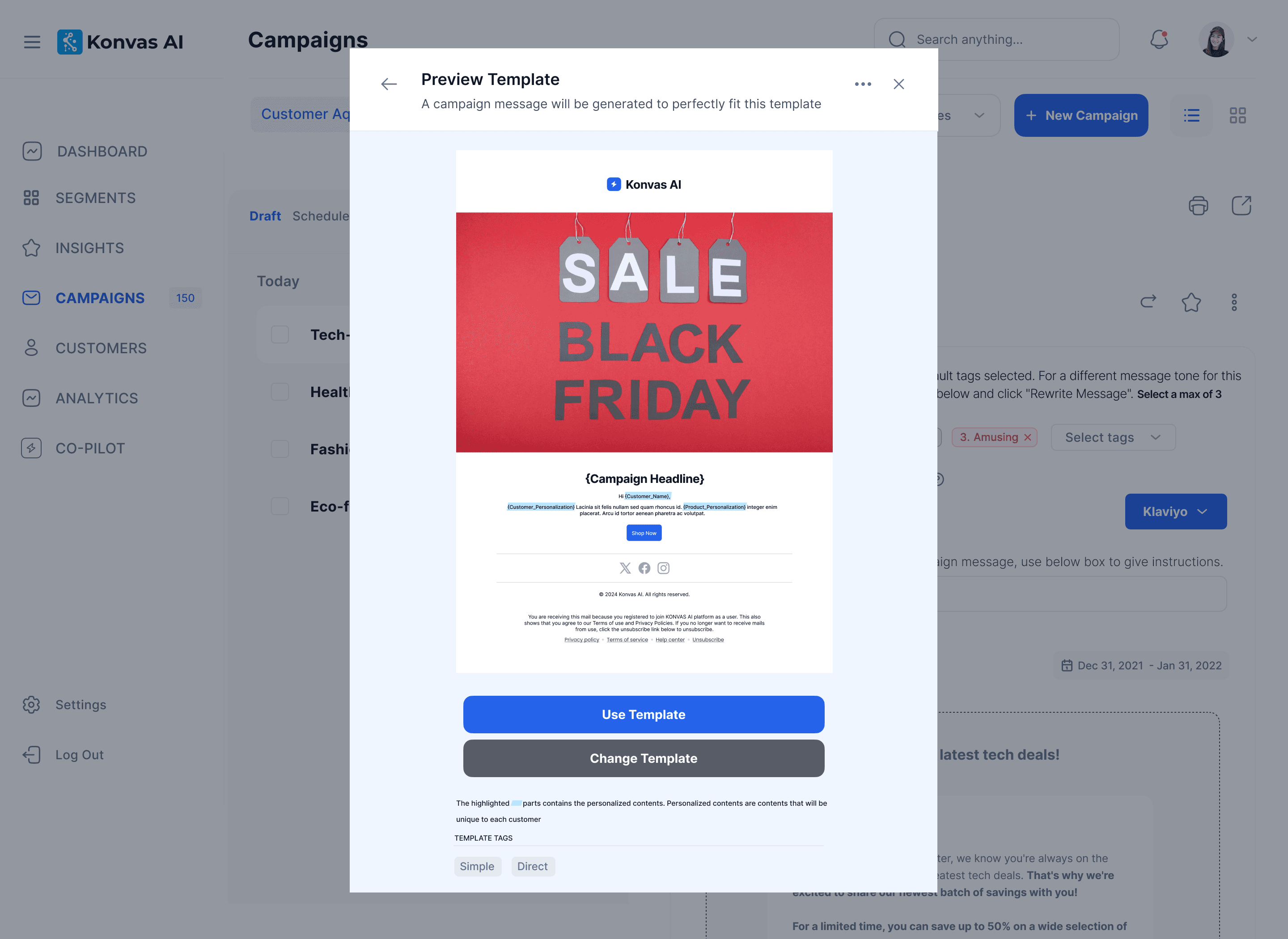
Usability testing
Usability tests with two participants surfaced the same two problems fast: onboarding was too long, and so was the path to a first message.
Results
- Setup moved out of sign-up and into the dashboard, spread out instead of front-loaded
- Password creation deferred past sign-up, making the first login noticeably smoother
Measuring success
Was the project successful and why?
A work in progress, told honestly
Trust improved but never got where we wanted. Store owners let us test on their live stores; none converted to paying customers. Techstars validated the idea; the market told us self-serve was not it. Shipping a feature that works is not the same as shipping a feature people trust.
Metrics and KPIs
- Accepted into Techstars while the product mostly existed in Figma
- Live-store testers, zero paying conversions, the gap that reshaped strategy
- Onboarding and time-to-first-message shortened after usability fixes
Future vision / next steps
- The next chapter looks less like a self-serve platform and more like an agency model
- A more focused roadmap: more testing before building
Chapter 04
Final designs
Previous case study
← Xel CareNext case study
Worthsight →